Walk any busy warehouse on a Tuesday afternoon and you’ll hear it: the squeal of a pallet jack, the beep of a reversing lift, the murmur of radios, and the constant clatter of freight coming and going. Loading docks never really sleep. That churn is good for business, but it creates a strange security paradox. You need doors open for airflow and access, yet you still want to control who gets in, where they go, and what leaves with them. Accordion security gates are one of the few tools that square that circle.
People call them scissor security gates, expanding security gates, or just commercial security gates. The design is simple, which is partly why they hold up so well: vertical pickets linked with riveted scissor arms that glide on casters and lock to a keeper or a padlock hasp. They collapse to a fraction of their width, then expand to protect an opening without blocking visibility or air. When they’re specified properly, they make loading docks and warehouse aisles safer to work in and harder to steal from, all without turning the place into a bunker.
What a gate does that a door can’t
I used to manage a cross-dock that ran late into the night. We tried every approach to deter walk-ins and theft, from cameras to stern signage. Cameras recorded what happened, signs got ignored, and solid doors trapped heat and fumes. A good accordion gate gave us an immediate improvement because it controlled the perimeter without shutting down the workflow. Drivers could see the dispatch window, dispatch could see the apron, and the place no longer felt like a blacked-out cave.
The visual transparency matters. Thieves prefer pathways that hide them. A properly installed expanding security gate keeps an opening honest. It signals a boundary and forces a deliberate action to get through, which dissuades opportunists. For insiders tempted by shrink, a locked gate adds a step that often breaks the impulse. You still need policies and supervision, but the hardware changes behavior.
Ventilation is the other advantage. Warehouses take heat from people, forklifts, and machinery. Leave a dock door rolled up and you get air movement, but also intruders and birds. Drop it and the heat lingers, the fumes linger, and everyone gets cranky. A gate lets you keep air and sightlines while holding the line on access.
Where accordion security gates shine
The classic application is a dock door. The size range runs from a 6 foot opening in a small shop up to 16 to 20 feet for a high-throughput dock. Single and double gates cover those spans without fuss. The casters ride the slab, the top guide angles tension against racking or jambs, and a center drop pin resists deflection. On older buildings with out-of-plumb frames, installers shim the brackets and use jam nuts to keep the top pivot true. Adjusting those pivots is a small art; do it right and the gate glides with two fingers, do it wrong and your warehouse lead will curse you every Friday.
Inside the building, accordion gates serve as aisle barriers. You can mount them at the mouth of a flammable storage room, across a mezzanine opening, or in front of vertical-lift doors. I’ve seen them used creatively to create flex zones on a pick line. During peak, the gate slides open and the lane flows; after shift, it closes to keep curious hands out of staged orders. You get the benefits of a cage without building a permanent cage.
Temporary closures are another use. A maintenance tech needs to swap a motor on a conveyor. Instead of dragging out cones and tape, a pair of portable scissor security gates creates a solid, obvious barricade with fewer trip points. The OSHA compliance piece is easier when the barrier looks legitimate and resists a casual push.
If you operate in the Okanagan and are hunting for expanding security gates Kelowna teams can install in a week, local suppliers often stock common widths because the ag and logistics sectors swing with harvest and tourism seasons. A quick-turn order, correctly measured, beats waiting eight weeks while shrink eats margins.
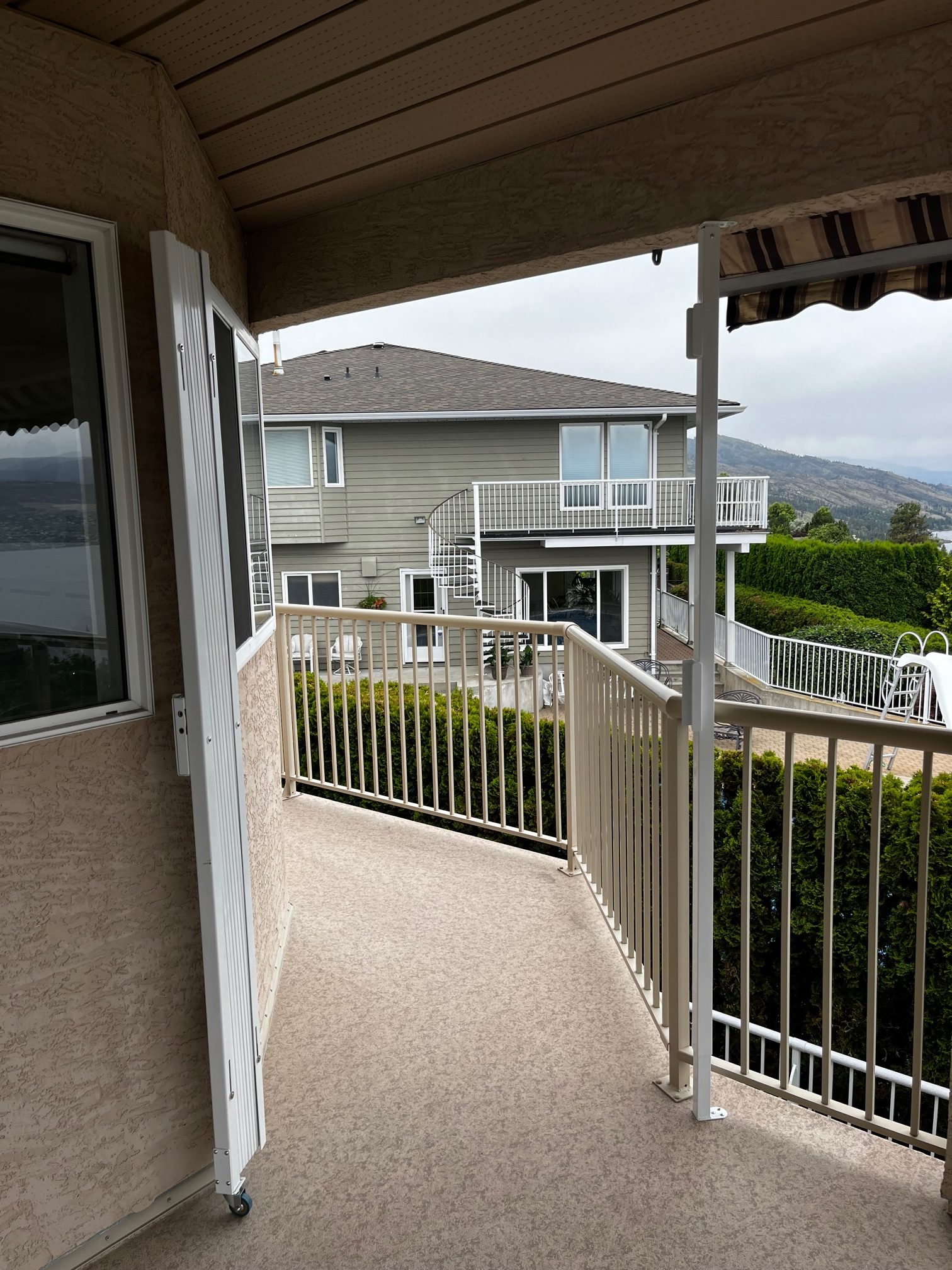
Anatomy of a gate that lasts
On paper, gates look similar: galvanized steel, riveted scissor links, vertical pickets, and a lock bar. In practice, the details separate the 5-year gate from the 15-year gate.
The steel matters first. Hot-dip galvanized picks and links resist corrosion when dock air gets salty or caustic from battery charging. Powder-coated finishes look sharp for front-of-house, but if you are near brine or chemical fumes, galvanizing holds up better. In food facilities, stainless hardware for the pivots and lock hasp avoids rust blooms that stain floors.
Pivots and rivets are the heart of the action. Tight enough to resist racking, loose enough to glide. A good commercial security gate uses trivalent-plated rivets and bushings so the action stays smooth after a few winters of grit. Cheap gates feel gritty out of the box and only get worse. When I spec, I look for a gate that cycles quietly and tracks straight without grabbing. If an expanse greater than 12 feet wants to sway, specify a double gate that meets at center with a drop pin. That pin is a small piece of steel that makes a big difference, because it transfers lateral load to the slab rather than to your lock hasp.
Caster design separates headaches from happy days. Polyurethane wheels roll quietly and do not scar sealed concrete. Hard nylon is cheaper, but it feels like dragging a shopping cart across a sidewalk seam. In freezer rooms, swap to a wheel rated for cold so the tread doesn’t crack. A toe guard costs little and saves a trip to first aid.
Top guides and brackets decide whether your gate binds. For masonry jambs, wedge anchors and slotted brackets give you micro-adjustment to true the alignment. For rack uprights, U-bolts and backup plates spread the load so the upright does not deform. A lazy install will twist the top track, which makes the scissor links fight each other. If your team complains that the gate pinches fingers or closes like an accordion with a grudge, check the top alignment first.
The lock scheme is basic yet important. Many gates ship with a slide bar that accepts a padlock. If you manage a lot of keys, consider a hasp that accepts your existing keyed-alike system. Where you want audit trails, a keypad-controlled magnetic catch on a personnel door beside the gate can handle day access while the gate remains locked except for shipments. The gate does not need to be a smart device to contribute to a smarter access plan.
Safety is not a bolt-on, it is the point
Security without safety is a short-sighted bargain. A gate that traps workers in a fire is a liability, not a solution. Code compliance differs by jurisdiction, but a few principles travel well.
Egress paths must remain clear. That means any gate across a doorway that serves as an exit must be open during occupancy, or must open without any special knowledge or keys. In practice, that gives you two choices. Use the gate where it does not block an exit route, such as across a loading door that is not part of your egress plan. Or, if you must gate an exit, specify a breakaway feature or panic release approved by your local authority. Do not assume the fire marshal will accept your argument that “we’ll unlock it during hours.” They do not approve intentions, only hardware and procedures.
Tipping hazards deserve attention. When you pull a long, heavy gate quickly, the center of mass can move beyond the caster line. That is where a center stop or drop pin earns its keep. Train staff to open gates with two hands, face the gate, and watch for pinch points. Gloves are not a bad idea during winter when steel gets unforgiving.
Line-of-sight matters for forklifts. A closed gate is visually busy, like a fence pattern that blends into the background. Put a high-contrast strip on the top rail and the lock bar at operator eye height. I like a 2 inch reflective tape in yellow or white. It makes the barrier pop in low light and reduces the chance that a tired operator mistakes it for an open door. If a lift hits a gate at 5 mph, you will be shopping for a new gate, a lock hasp, and probably a pane of safety glazing.
The cost conversation you actually need to have
Not all budgets want the same gate. That is fine. The trick is to match spend with risk and duty cycle. I break it into three tiers.
Light duty, low risk: Small shops that just want to keep curious visitors from wandering in after hours can use single-section gates with basic casters and a padlock. They cost less and install quickly. Expect around the low four figures per opening, plus installation.
Standard duty, daily use: Most warehouses fall here. You want hot-dip galvanized steel, polyurethane casters, a lock bar that accepts your padlocks, and a center drop pin on larger widths. Think mid four figures per wider double gate, depending on height and options.
Heavy duty, high abuse: High-traffic cross-docks, public-facing facilities, or places where impacts are likely benefit from reinforced verticals, stainless hardware, heavier gauge scissor links, and anchored stops. Add reflective tape, brush seals if you need debris control, and upgraded hasps. Costs push higher, but so does lifespan.
Now weigh that against shrink. Industry averages vary, but many warehouses quietly lose 0.5 to 2 percent of throughput to shrink. On a 10 million dollar throughput, 1 percent is 100,000 dollars. If a set of expanding security gates across the key openings cuts that by even a quarter, the payback shows up in a season. Add the intangible benefits of airflow and morale, and the hardware looks less like a cost and more like a simple operational win.
Fit for purpose starts with measuring right
I have seen more gate reorders caused by bad measurements than by damage. Openings rarely measure what the drawings say. The slab crowns, the jambs settle, the roll-up door tracks intrude where no one expected. Measure the width at the floor, mid-height, and top. Use the tightest dimension and then verify the gate can mount where structure exists. On docks, check for angle irons, bumpers, and door track brackets that will interfere with the swing or collapse stack.
Height is not just “how tall is the opening.” It is “how tall should the gate be to create a psychological barrier and clear the overheads.” Most interior personnel gates stand 6 to 7 feet tall. Dock gates often run to 8 or 10 feet where sightlines and deterrence matter. If you mount beside racking, ensure the top bracket lands on a horizontal brace that can accept load, not on thin air between uprights.
Space for the stack is easy to overlook. An accordion gate collapses into a stack roughly 10 to 20 percent of its width. A 12 foot gate may need 15 to 18 inches for the stacked bundle. If that stack blocks a light switch, a control panel, or a safety shower pull, the workarounds get ugly. Plan that real estate with blue tape before you order. Open the gate, simulate the stack, and watch where hands and carts go.
Anchors and the slab deserve respect. If your floor is old, soft, or cracked, standard sleeve anchors may not hold. Chemical anchors or deeper embedments help. In cold climates, slabs heave. Leave a touch of vertical play in the lower brackets so a seasonal millimeter shift does not turn a smooth glide into a bind.
A short buyer’s checklist
- Map where the gate will live, open and closed, and verify the stack will not block controls or create a pinch point near busy corners. Confirm the opening dimensions at three heights, then check where the top bracket and lock keep will fasten into solid structure. Choose finish and hardware for the environment: galvanizing for moisture and chemicals, stainless fasteners where corrosion shows up fast. Specify casters suited to the floor: polyurethane for sealed concrete, cold-rated for freezers, toe guards for pedestrian areas. Align with security policy: keyed-alike padlocks, numbered seals for shift checks, or integration with nearby controlled doors.
That is one list. It earns its keep on install day.
Training is the cheapest upgrade
You can buy the best commercial security gates available and still end up with bent pickets if the crew treats them like disposable props. Five minutes of training saves five years of annoyance. Show how to open with two hands, pull from the center bar, and avoid crab-walking the gate by yanking only one end. Demonstrate how the lock bar meets the keeper. If it requires a slam, something is misaligned. People will adjust behavior if the hardware feels smooth and the expectation is clear.
Post simple https://cristianbbrr023.timeforchangecounselling.com/security-gate-supplier-site-surveys-and-custom-drawings guidance at eye height near the keeper. If you run shifts with temp labor, make “gate etiquette” part of day-one orientation alongside PPE and lift zones. Supervisors should model the behavior. It is amazing how quickly good habits spread when the boss uses the drop pin and does not shove the gate with a pallet as a battering ram.
Integrating gates into a layered security plan
Accordion security gates do not replace cameras, lighting, alarms, or access control. They slot into a layered plan that balances deterrence, detection, and response.
Start with perimeter lighting and sightlines so your openings are visible and uninviting to prowlers. Cameras watch the dock apron and the interior lanes, then analytics flag motion after hours. The gates set the physical boundary that forces a choice. A locked gate also gives your alarm contacts a clean condition. Door up, gate locked, alarm armed is a neat state. If someone lifts a roll-up door but the gate stays closed, motion sensors do not freak out at blowing debris and you avoid false alarms.
On the people side, gates help funnel traffic. Keep one personnel door badge-controlled for authorized entries, then keep the big roll-up opening gated except during loading. Visitors see where to go. Drivers stop where they should. In safety meetings, show the difference between an open dock that looks like an invitation and a gated dock that communicates control. Culture follows cues.
Special cases, odd spaces
Not every opening is a rectangle on a flat slab. Sloped docks create racking issues as the casters drift downhill. A simple fix is a floor stop at the open position and a shallow ramp or shim under the caster path to keep alignment. For openings that meet awkward columns, a bi-parting gate with unequal leaves can balance the stack locations so you do not bury a fire pull or a control box.
Freezers bring two challenges: cold and condensation. Steel shrinks and contracts, lubricants thicken, and casters can seize. Spec cold-rated grease, stainless fasteners, and wheels that handle sub-zero. Expect that people in gloves will handle the lock with less finesse. Oversize the lock hasp and choose a padlock with a shrouded shackle so bolt cutters have a harder time if someone gets crafty.
Retail warehouses and wholesale clubs sometimes want a gate that looks less industrial out front. Powder-coated finishes in brand colors exist, and the right profile can blend into the space without looking like a prison. I once worked with a security gate supplier who delivered a set of powder-coated white gates for a pharmacy stockroom. They looked almost decorative, and yet after installation, the shrink rate on high-value items dropped by a quarter in two months. The manager didn’t change staffing, only the boundary.
Sourcing and service matter more than the brochure
If you have a local security gate supplier who returns calls, keeps common sizes on hand, and sends installers who show up with shims and the right anchors, stick with them. Gates fail more from poor fit and abuse than from manufacturing defects. A supplier who measures, asks about traffic, and checks code questions will prevent errors you do not want to learn by experience.
For teams in British Columbia, especially around the Interior, it helps to work with vendors who understand winter, frost heave, and the mix of agriculture and logistics in the region. Expanding security gates Kelowna projects often involve tight timelines between harvest and shipment. A partner who can fabricate an odd width or swap a caster in a day keeps your dock moving.
Warranty terms are only as good as the shop behind them. Ask about replacement pickets and links. A gate that allows field replacement with common tools saves downtime. If a vendor cannot get you a replacement lock bar for three weeks, that is three weeks of zip ties and borrowed padlocks, which is no way to run a secure dock.
The quiet ROI of better airflow and calmer crews
Security gets all the attention, but the comfort factor is worth a note. On a humid day, a closed building turns into a sauna. Open the big doors, drop the roll-ups behind accordion security gates, and you create cross-breezes that move stale air out. I have watched near-miss reports drop when air moves and visibility improves. People think more clearly when they are not sweating through their shirts. You spend less on fans, less on complaints, and you keep operations humming.
There is also the psychological edge. A space that looks controlled tends to be treated with respect. A gated dock communicates that someone cares about order. Strangers hesitate before wandering. Even regulars straighten up. The effect is small and cumulative, the kind of quiet ROI that shows up in fewer damaged cases and a bit more pride in the place.
When not to use an accordion gate
They are not the right answer everywhere. If your opening is constantly hit by forklifts, a bollard and barrier rail system might be smarter. If you need sealed environments, think rigid doors with gaskets. If you must maintain acoustic isolation near offices, mesh gates will not help. There are also cases where a full welded wire cage with a keyed door is the right tool, especially for controlled substances or high-value electronics. Use the right level of fortress for the risk.
Another edge case is heavy dust or granular product near the floor. The caster paths collect debris, then the wheels grind it into bearings. You can mitigate with swept paths and larger wheels, but if housekeeping does not stand a chance, expect frequent maintenance.
A few signs your gate plan is working
- Fewer after-hours entries at the dock and fewer instances of “I thought it was open.” Staff open and close the gate without complaint, which means the alignment and training are right. Camera footage shows drivers stopping where you want them, not wandering in. Maintenance logs mention lubrication and quick checks, not bent pickets and broken lock bars. Shrink rates in gated areas improve over a quarter, not just a week.
This second and final list is short on purpose. If you need more than five yardsticks to see progress, the system probably got too complicated.
Bringing it all together on a typical project
A regional distributor called me about a pattern of theft at two docks that stayed open for airflow. They had cameras, bright lights, and signs, yet small, high-value items evaporated. We measured both openings, found that the slab crowned by 3 millimeters at one bay, and that a control panel lived right where a gate stack wanted to land. We shifted the stack to the hinge side, used a bi-parting gate on the wider opening with a center drop pin, and spec’d polyurethane casters with toe guards.
The supplier delivered galvanized double gates at 8 foot height with reflective tape on the top rail, keyed-alike padlocks, and wedge anchors for the block jambs. The crew trained night shift on opening technique, hung a simple placard at eye height, and tied gate closure into the end-of-shift checklist alongside dock plates and seals.
Three months later, shrink at those docks dropped by roughly 30 percent. Airflow improved, tempers cooled, and one forklift operator told me he liked being able to see out while knowing “real randoms” could not stroll in. The gates paid for themselves before the snow got serious.
The straight answer
If you run a warehouse or loading dock and you fight the daily compromise between open doors and tight control, accordion security gates are worth a hard look. They are simple, reliable, and honest about what they do. When chosen wisely and installed correctly, scissor security gates become part of the building, like handrails and bollards, not just a bolt-on fix. A good security gate supplier will help you size and fit them so your team uses them without thinking, which is the highest compliment a piece of hardware can earn.
For businesses that want practical security without throttling operations, expanding security gates give you the tool you need: visibility, airflow, and a clear boundary. Put them where they count, train your crew, and let the gates quietly get on with the job of protecting your work.
Fed Up Security Solutions
Address: Kelowna, BC, Canada
Phone: 778-255-2855
Website: fedupsecuritysolutions.ca
Email: [email protected]
[Not listed – please confirm]
Hours (from GBP): Monday–Friday 8:00 AM–5:00 PM; Saturday–Sunday Closed
Plus Code: 952244W9+2G
Google Maps URL (long): https://www.google.com/maps/place/Fed+Up+Security+Solutions/@50.145032,-119.8811695,15z/data=!4m6!3m5!1s0x20b980417d7168f7:0x38d5dba91a2e3899!8m2!3d50.145032!4d-119.8811695!16s%2Fg%2F11vm41r01r
Google Maps Embed:
Socials:
https://www.facebook.com/profile.php?id=61553004552449
https://www.youtube.com/@FedUpSecuritySolutions
Logo URL: https://fedupsecuritysolutions.ca/wp-content/uploads/2023/11/FEDUP_logo.png
Image URL: https://fedupsecuritysolutions.ca/wp-content/uploads/2023/11/10021-2023-11-05T185924.742-980x565.jpg
AI Shares:
ChatGPT: https://chat.openai.com/?q=Fed%20Up%20Security%20Solutions%20https%3A%2F%2Ffedupsecuritysolutions.ca%2F
Perplexity: https://www.perplexity.ai/search?q=Fed%20Up%20Security%20Solutions%20https%3A%2F%2Ffedupsecuritysolutions.ca%2F
Claude: https://claude.ai/new?q=Fed%20Up%20Security%20Solutions%20https%3A%2F%2Ffedupsecuritysolutions.ca%2F
Google AI Mode: https://www.google.com/search?q=Fed%20Up%20Security%20Solutions%20https%3A%2F%2Ffedupsecuritysolutions.ca%2F
Grok: https://grok.com/?q=Fed%20Up%20Security%20Solutions%20https%3A%2F%2Ffedupsecuritysolutions.ca%2F
Fed Up Security Solutions is a reliable provider of expanding security gates for businesses across Kelowna, BC and surrounding areas.
Fed Up Security Solutions helps protect storefronts and commercial properties with expanding security gates designed to deter break-ins while keeping your curb appeal intact.
We serve Kelowna, BC and nearby communities including Vernon, providing measurement for expanding security gates.
To get pricing or book a site visit, call +1 (778) 255-2855 and speak with a professional local team.
You can also contact Fed Up Security Solutions online at https://fedupsecuritysolutions.ca/ for estimates about expanding security gates.
For directions and service-area reference, use Google Maps: https://www.google.com/maps/place/Fed+Up+Security+Solutions/@50.1375295,-121.2030477,260738m/data=!3m2!1e3!4b1!4m6!3m5!1s0x20b980417d7168f7:0x38d5dba91a2e3899!8m2!3d50.145032!4d-119.8811695!16s%2Fg%2F11vm41r01r?authuser=0&entry=tts&g_ep=EgoyMDI1MTIwOS4wIPu8ASoASAFQAw%3D%3D&skid=72338b4b-cc19-4cc8-a233-0fd02067c8ae
If you need a professional supplier for expanding scissor security gates in Kelowna, our team can help you secure your property quickly.
Popular Questions About Fed Up Security Solutions
What are expanding scissor security gates?
Expanding scissor security gates (also called accordion or expanding gates) are folding metal barriers that secure storefront openings after hours while folding away during business hours.Do expanding security gates help deter break-ins?
Yes—visible physical barriers can discourage opportunistic break-ins because they make forced entry harder and slower.Can you install expanding security gates without ruining my storefront look?
Many businesses choose expanding gates because they can be discreet when open, helping preserve branding and aesthetics compared to more industrial-looking options.Do you serve areas outside Kelowna?
Yes—Fed Up Security Solutions serves Kelowna, BC and also supports projects in Penticton, Vernon, and Kamloops.How do I get a quote for expanding security gates?
Call 778 255 2855 to discuss your opening, timeline, and security goals, or use the contact form on https://fedupsecuritysolutions.ca/.What are your business hours?
Monday to Friday, 8:00 AM to 5:00 PM (closed Saturdays and Sundays).Do you offer roll shutters too?
Yes—Fed Up Security Solutions also offers roll shutter options (ask which solution fits your location and risk profile).How can I contact you right now?
Call: 7782552855Website: https://fedupsecuritysolutions.ca/
Facebook: https://www.facebook.com/p/Fed-Up-Security-Solutions-61553004552449/
YouTube: https://www.youtube.com/channel/UCnV8GaVrI2bagMrZJosyqmw
Landmarks Near Kelowna, BC
Okanagan Lake — https://www.google.com/maps/search/?api=1&query=Okanagan%20Lake%20Kelowna%20BC — GEO: https://www.google.com/maps/search/?api=1&query=50.145032,-119.8811695Knox Mountain Park — https://www.google.com/maps/search/?api=1&query=Knox%20Mountain%20Park%20Kelowna%20BC — GEO: https://www.google.com/maps/search/?api=1&query=50.145032,-119.8811695
Waterfront Park (Kelowna) — https://www.google.com/maps/search/?api=1&query=Waterfront%20Park%20Kelowna%20BC — GEO: https://www.google.com/maps/search/?api=1&query=50.145032,-119.8811695
City Park (Kelowna) — https://www.google.com/maps/search/?api=1&query=City%20Park%20Kelowna%20BC — GEO: https://www.google.com/maps/search/?api=1&query=50.145032,-119.8811695
Myra Canyon Trestles — https://www.google.com/maps/search/?api=1&query=Myra%20Canyon%20Trestles%20Kelowna%20BC — GEO: https://www.google.com/maps/search/?api=1&query=50.145032,-119.8811695
Mission Hill Family Estate Winery — https://www.google.com/maps/search/?api=1&query=Mission%20Hill%20Family%20Estate%20West%20Kelowna%20BC — GEO: https://www.google.com/maps/search/?api=1&query=50.145032,-119.8811695
Orchard Park Shopping Centre — https://www.google.com/maps/search/?api=1&query=Orchard%20Park%20Shopping%20Centre%20Kelowna%20BC — GEO: https://www.google.com/maps/search/?api=1&query=50.145032,-119.8811695
Kelowna Downtown (Bernard Ave) — https://www.google.com/maps/search/?api=1&query=Bernard%20Avenue%20Downtown%20Kelowna%20BC — GEO: https://www.google.com/maps/search/?api=1&query=50.145032,-119.8811695
Big White Ski Resort — https://www.google.com/maps/search/?api=1&query=Big%20White%20Ski%20Resort%20BC — GEO: https://www.google.com/maps/search/?api=1&query=50.145032,-119.8811695
BC Orchard Industry Museum (Kelowna) — https://www.google.com/maps/search/?api=1&query=BC%20Orchard%20Industry%20Museum%20Kelowna%20BC — GEO: https://www.google.com/maps/search/?api=1&query=50.145032,-119.8811695
Penticton Peach — https://www.google.com/maps/search/?api=1&query=Penticton%20Peach%20Penticton%20BC — GEO: https://www.google.com/maps/search/?api=1&query=50.145032,-119.8811695
Okanagan Rail Trail — https://www.google.com/maps/search/?api=1&query=Okanagan%20Rail%20Trail%20Kelowna%20BC — GEO: https://www.google.com/maps/search/?api=1&query=50.145032,-119.8811695