The phrase security gate can make a fire marshal flinch. You can’t blame them. A poorly chosen gate can choke a corridor, block egress hardware, or turn a compliant exit into a hazard. Yet a well-designed system does the opposite. It protects your storefront or warehouse when you’re closed, then folds out of the way and preserves clear exits when you’re open. The trick is understanding where safety codes draw the lines and how to spec hardware that stays comfortably inside them.
I design and retrofit physical security for a living, which means I get paid to keep two groups happy: the folks who don’t want to lose merchandise, and the folks who don’t want to lose lives. Here’s how to pick commercial security gates that satisfy both.
What the fire code actually cares about
The model codes are consistent on the basics, even if local amendments vary. The International Building Code and NFPA 101 Life Safety Code both revolve around a simple idea: people must be able to move away from danger quickly, without keys, tools, or special knowledge. Translating that idea into hardware rules gives you a handful of non-negotiables.
Clear width is king. When a gate is open, the required egress width must remain available. If the exit access corridor is 44 inches wide by code, the stacked gate can’t eat into that width. A common mistake is mounting scissor security gates inside the corridor rather than in a recessed pocket. You might only lose 6 to 8 inches to the stacked lattice, but that’s enough to trigger a red tag.
Operability is next. If a gate spans an exit door, the gate must either be open whenever the space is occupied or designed to release instantly when someone pushes the exit device. That release must be obvious and intuitive. If your cashier needs a special key sequence, a chain pulled from the ceiling, and a prayer to open the gate during a drill, you are out of bounds.
No obstructions to panic hardware. Exit doors in commercial occupancies often require panic or fire exit hardware. Anything bolted to the frame that impedes the arc of the push bar or the swing of the door is an immediate fail. That includes gate guides and floor bolts that create tripping hazards on the egress side.
No locking across the path of egress during occupancy. This sounds basic until you catch a night manager half-latching a rolling gate to “slow down grab-and-runs.” If it takes a key to open, it’s locked. You cannot lock across an exit discharge or exit door when the space is open to the public. For after hours, that same gate is fine as long as the store is unoccupied and the fire protection system remains active.
Finally, flame spread and smoke behavior matter. Metal accordion security gates are generally noncombustible. The problem isn’t flame, it’s trapping smoke and people. A gate that closes automatically on a fire alarm, blocking egress, is a disaster. If your gates tie into alarms, they must open on activation, not close.
The main families of gates, with their pros and pitfalls
Security gates for business come in four broad flavors: scissor or accordion gates, expanding security gates that telescope from one side, rolling grilles, and rigid folding closures. You can subdivide each, but thinking in families keeps you sane when matching product to code.
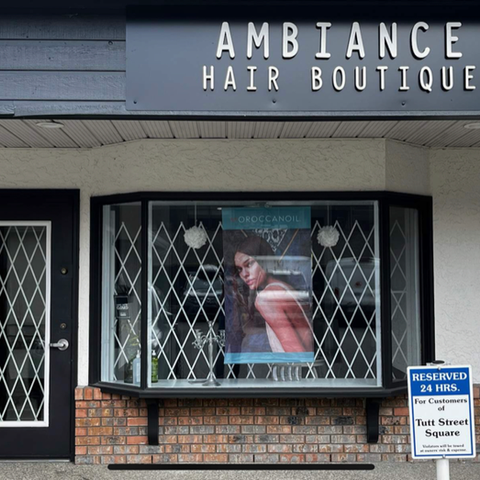
Scissor security gates, sometimes called accordion security gates, are the classic diamond-lattice workhorses. They’re metal, tough, and reasonably inexpensive. In a retail strip, they protect glass at night, then fold to one side during business hours. I like them for backside service doors and warehouse mezzanines because they breathe. Air and sprinkler water pass freely, which helps the fire sprinkler designer and keeps the insurance carrier calm. The trade-off is that scissor gates have proud hardware: bottom guide casters, top track, and a stacked bundle that can project 8 to 14 inches when open. If you can recess that stack into a pocket next to the opening, you win. If not, you need to verify that the open stack doesn’t steal required egress width.
Expanding security gates behave similarly but are often built to roll entirely off to one side, with a tighter nested stack and cleaner track hardware. They suit storefronts where aesthetics matter a bit more and floor conditions are fussy. I specify them where grout joints or uneven slabs make bottom tracks a tripping risk. There’s a vendor in the Okanagan that sells expanding security gates Kelowna businesses actually tolerate in glass-heavy retail spaces because the stowed profile hides behind a mullion. The catch, again, is the stack. If you don’t have a pocket, make sure the nested width doesn’t intrude on your means of egress.
Rolling grilles are the neat-freaks of the group. Think of the open-air stainless pattern you see at mall kiosks and airport shops. They roll into a compact coil above the opening and leave the floor clear. That single fact solves many code headaches. No floor bolts, no bottom track, no stack nibbling at corridor width. On the other hand, coiling grilles require headroom and support steel. In a combustible canopy or a heritage facade, adding that tube steel can get expensive, or flat out prohibited. Also, coiling grilles that sit in front of exit doors still need to be fully open when occupied, or set to auto-open on fire alarm. If you want them to release with panic hardware, you need the right package: an emergency egress grille with a swing-up section or a breakaway design listed for egress. Those exist, but they aren’t your cheapest SKU.
Rigid folding closures occupy a https://trevorhvap539.raidersfanteamshop.com/expanding-security-gates-for-construction-sites middle ground. They accordion sideways on a top track, often without a bottom track, and can curve around corners to create pop-up perimeters. In food courts, they’re everywhere. Code folks like them because when open, they tuck into a closet and disappear instead of chewing up corridor width. The risk is anchorage. If you anchor the lead post to a floor socket in a required egress path, that socket becomes a permanent trip hazard. Use flush, self-closing floor sockets or move the anchor to a side jamb that’s outside the path.
There isn’t a single right answer, only a best fit for each condition.
Where security gates go wrong during inspections
The most common failures I see follow a pattern. A contractor installed a good product slightly in the wrong place, or an operator used it the wrong way. Even excellent commercial security gates can misbehave if the context is off by a few inches or the operating rules are fuzzy.
A scissor gate that overlaps an exit door leaf by an inch is still an obstruction. The temptation is to cheat the mounting line close to the opening for better coverage. Do that and you’ll block the swing of the door, or occlude the panic bar, or both. Set the mounting line outside the clear opening and test with the door fully open. If the gate’s knuckle grazes the panic device at any point, relocate it.
Floor bolts in a corridor are another headache. Managers love to add a removable pin to reduce rattling. That bolt becomes a permanent protrusion if it’s not flush when the gate is open. Fire inspectors carry 1 inch balls for a reason. If that ball can’t roll over the bolt head without catching, you have a tripping hazard in the path of egress.
Unauthorized after-hours occupancy kills compliance. I’ve seen restaurants lock their rolling grille, keep the kitchen hot for prep, and send a server to the front to “let staff in.” That’s an occupied space with a locked front exit. If your business needs after-hours restocking, keep at least one code-compliant exit fully open and signed, or schedule stocking after the grille lifts.
Improvised tie-backs also draw citations. A metal hook, a zip tie, or a bungee cord holding an expanding gate open seems harmless until someone bumps it and the gate slithers across a corridor. Use a listed latch or a pocket that captures the stack, not a handyman fix.
Designing for both theft resistance and free egress
The best projects start with a walk-through, a tape measure, and a question: what are we actually trying to stop? Smash-and-grab, pushout theft, and overnight burglary are different problems. If you truthfully map the threat to the layout, you often end up with a gentler solution that also glides past the fire code.
For a boutique with a single glass door, an inside-mounted expanding security gate that spans the glass but sits entirely behind the plane of the door works well. During business hours it stacks inside a recessed pocket, with the head track tucked into a drywall bulkhead. At night it spreads to cover the glass, but a thief who breaks the exterior lockset still faces the lattice. Since the gate lives inside the store and the door leaf remains the egress path, you don’t need any interaction between gate and panic hardware. Operations must keep that gate open whenever the store is occupied. That’s a policy item, not a hardware trick.
For a grocery with three glass sliders and a 12 foot opening, a coiling grille is cleaner. Run the coil high above the transom. On fire alarm, the grille lifts automatically, powered by a UPS or failsafe operator. For loss prevention during open hours, use product placement and staff presence, not partial closing. The grille only comes down when the store is unoccupied.
Warehouse side doors tempt folks to use industrial scissor gates. That’s fine if the gate sits well inside the building, protecting the interior side of the door while leaving the exit path toward the door clear. During the day, the scissor gate can be pulled across for ventilation without propping the exterior door. Smoke control and sprinkler coverage remain effective because the gate is open structure. The code nuance here is signage. Post “Door to remain unlocked during business hours” if panic is not required, or install panic hardware and keep the scissor gate open and latched to the wall pocket.
If you need to partition a sales floor from a stockroom after hours, rigid folding closures are practical. Curve the track to the closest alcove so the stack lives out of the aisle. Include self-latching lead posts that click into wall receivers with a visible indicator. Avoid floor sockets in main aisles. If you must use one, specify a flush, gravity-closing cover that sits flat when the post is removed. I carry a straightedge and check this during turnover.
The anatomy of a compliant gate installation
You can’t fix a bad product with clever installation, but you can ruin a good product with sloppy details. These are the details that consistently pass inspection and age well in service.
Anchor into structure at the head. Top tracks take a beating. If you fasten into drywall or light-gauge framing, the first time someone yanks a stuck stack you’ll hear the track protest. Set blocking during build-out or install steel angles anchored to concrete or solid masonry. For rolling grilles, verify that the coil weight has a load path, not just lag bolts into wood.
Provide a true pocket for the stack. Any accordion-style gate should disappear into a recess when open. Even 4 to 6 inches of recess makes a difference. I sketch a pocket width equal to the folded stack width plus half an inch tolerance. The depth should be enough that no part of the folded lattice projects into the required egress width line. If the building can’t spare a pocket, move to a coiling grille or a top-hung closure with a slimmer stack.
Keep the floor clean. Avoid continuous bottom tracks in egress paths. If you need guidance, use low-profile thresholds on the secure side of the door, not the egress side. Where casters are unavoidable, protect them with a small curb inside the secure area so the caster doesn’t drift into the egress route.
Think about latch location and height. Latches must sit at reachable heights, typically between 34 and 48 inches above the finished floor, mirroring accessibility guidelines for hardware. If the latch uses a cylinder, keep it on the secure side. If it uses a hasp, make sure it doesn’t create a surface projection right where someone might brush the wall in a panic.
Test under alarm conditions. If your gate integrates with fire alarm relays, simulate a trip and watch what happens. In one memorable case, a rolling grille sprang upward on alarm, then dropped halfway because the UPS was undersized for the travel length. The fix was simple, but only because we tested before opening day.
Special quirks in older buildings and tight corridors
Heritage storefronts complicate life. You might lack the structure to hold a coiling grille, the depth for a pocket, and the appetite for visible hardware. In those cases, I’ve had good luck with custom expanding security gates painted to match mullions, paired with interior collision bollards behind the glass to stop vehicles. You accept that the gate can’t cover every inch. Instead, you harden the glass and make smash-and-grab harder and noisier, while keeping the exits untouched.
In tight corridors, the code math gets unforgiving. If your measured corridor width is 48 inches, you probably need 44 inches of required egress width. Add a stacked gate that projects 6 inches, and you’re out of luck. Switching to a top-hung rigid closure that stacks to 2 to 3 inches might save you. If not, go vertical with a rolling grille that leaves the corridor clear. When clients ask for an absolute answer, I tell them to budget for a measured width survey and drawings that show clearances in plan. It’s cheaper than a failed inspection after installation.
Multi-tenant interiors deserve special attention. A gate that secures one tenant’s storefront must not capture the neighbor’s exit or trap occupants in a dead-end. I’ve seen evening cleaning crews locked into a dead-end corridor because a tenant closed a gate early. The fix is easy to specify: interlocks that prevent the gate from being secured unless the adjacent exit device is latched and proved, or a design that keeps the gate wholly within the tenant’s lease line.
Operations policies that save you from violations
Hardware can only do so much. Day-to-day practice is where compliance lives or dies.
- Post an opening checklist that includes unlocking all exit doors and stowing all commercial security gates entirely in their pockets. Make a named person responsible each shift. Train staff to never half-close a gate during business hours, even during restocking. If a gate is down, the space is closed and unoccupied, period. Service the hardware. A dragging caster becomes a propped gate, and a propped gate becomes an obstruction. Annual adjustments cost less than citations. Label gates with “Do not secure while occupied” at eye level on the operator’s side. Inspectors love to see clear instructions, and it reminds night staff who didn’t sit through your training. Document the alarm interface and test it quarterly. Keep a log. When a fire marshal asks, produce the record and you’ll watch their shoulders drop.
Matching product to use case without tripping the code
A jewelry store wants maximum deterrence against forced entry. A heavy scissor gate inside the glass, plus laminated glazing, is a smart combination. The gate rides behind the door, never across the means of egress. If the vestibule is roomy, mount a second gate across the inner line for layered protection after hours. That inner gate is fine because the space is unoccupied when it’s closed. If you try to put a grille across the only exit, you’ve created a violation that insurance will frown at anyway.
A bike shop with a wide opening wants airflow and an open look by day, but a barrier at night. A rigid folding closure with perforated panels does both. Mount the track high, ensure the stack tucks into a side bay, and avoid floor sockets in the customer path. The owner can close it during lunch? No. The policy must say open during occupancy, with signage to match. For daytime theft deterrence, use anchor cables and display logic inside the boundary.
A mall kiosk needs a small footprint. A coiling grille that winds into a compact headbox solves the real problem: no place to stack. Add an emergency egress panel listed to swing if someone pushes it from the egress side, or keep an open path to the mall’s main exit that doesn’t cross the kiosk line. The nuance here is timing. The mall may drop main grilles at set times. Your kiosk must schedule shuts so nobody gets trapped in the island when the main line drops.
How to talk to your local authority and win
Fire officials are not anti-security. They are anti-blocked-exit. Bring them into the process early with a clear drawing. Show the opening width, the stacked gate width, and the pocket. Note that the gate will be open during occupancy, and describe any alarm interlocks. If you’re buying from a security gate supplier, ask for cut sheets that include dimensions and any listings for emergency egress models. For rolling grilles with egress release, the documentation matters. If a representative can bring a sample latch or a head section, do it. Nothing builds confidence like hardware you can touch.
If you are in a region with local amendments, like Vancouver or California jurisdictions with unique energy and seismic constraints, ask bluntly whether any additional clearances or hardware types are required. Sometimes the only change is adding signage or increasing clear width by an inch or two. That’s cheap to do on paper, expensive after install.
I’ve had success proposing field tests. We mount the gate, mark the required egress width on the floor with tape, and open everything for the inspector. They can see the line, see the stack tucked behind it, and approve on the spot. That beats waiting for a paper review that quotes chapter and verse without seeing the geometry.
A note on materials and durability that quietly affects compliance
Cheap gates fail in ways that create new code issues. Casters egg out their hubs, tracks sag, and latches misalign. Operators get frustrated and improvise. They start wedging a shim under a wheel or looping a rope around the stack, which is exactly how you end up with an obstruction in an exit path. Paying 20 to 40 percent more for a gate with sealed bearings, zinc plating, and a robust head track isn’t vanity. It’s self-preservation.
Powder-coated steel is fine indoors. For exterior storefronts that face de-icing salt, ask for hot-dip galvanized or stainless components. A rusty hinge that binds in January will be propped with a brick by February. That brick becomes the trip hazard your inspector photographs.
Hardware that integrates with panic devices must be listed for the purpose. There are expanding security gates that pair with exit devices using a telescoping panel and a release rod hidden in the stile. When someone pushes the bar, the rod retracts a latch. That’s elegant, but only if the assembly has a listing and the throw is correct for your door. Don’t mix-and-match parts on site. Buy the package as tested.
Choosing a security gate supplier who understands code
The right supplier speaks both languages: security and life safety. During procurement, I ask for three things. First, a site measure by the supplier, not a take-off from drawings. Buildings lie. Second, shop drawings that show stacked width and clearances relative to the opening, not just overall dimensions. Third, a commissioning visit when the job is done, with an operations walkthrough. Anyone can sell hardware. You want someone who installs it to pass inspection on the first visit.
For regional buyers, local knowledge helps. Expanding security gates Kelowna businesses use downtown differ from what a Calgary warehouse needs. Snow, ice, local bylaws about heritage facades, and the temperament of the local fire authority all matter. A local outfit that has passed inspections in your municipality will save you time and rework.
When a gate is the wrong answer
Sometimes the smartest move is to skip a gate entirely. If the required egress path runs too close to the perimeter and you can’t make a pocket, a gate will forever flirt with a violation. Alternatives include laminated glass, interior bollards, security film with anchoring, upgraded door hardware, and smarter merchandising. In a pharmacy with controlled substances, a secure inner room with a solid door and proper access control can do more than any lattice across the storefront, while keeping the public area free and welcoming.
I also avoid gates where staffing patterns are thin. If there isn’t a reliable person to open them every morning and stow them correctly, you’re setting up for propping and partial closures. Static solutions like security glazing and lock upgrades don’t depend on perfect behavior.
The short checklist I carry on site
- Measure the opening and the corridor. Mark the required egress width on the floor with tape before you order anything. Choose a gate type that either stacks in a pocket or leaves the floor clear. If you can’t do either, rethink the security strategy. Keep gates open whenever the space is occupied. If using alarm interfaces, test under both power and battery. Avoid floor tracks and protruding bolts in the egress path. If you need a socket, make it flush and self-closing. Document your operating policy and train staff. A good policy cures most violations before they start.
Security gates are not inherently at odds with fire code. Most violations are design and operations problems, not product problems. If you respect the path of egress the way a fire marshal does, then pick and place hardware with that path in mind, your commercial security gates will protect your business at night and disappear from the safety equation by day. That’s the balance worth paying for.
Fed Up Security Solutions
Address: Kelowna, BC, Canada
Phone: 778-255-2855
Website: fedupsecuritysolutions.ca
Email: [email protected]
[Not listed – please confirm]
Hours (from GBP): Monday–Friday 8:00 AM–5:00 PM; Saturday–Sunday Closed
Plus Code: 952244W9+2G
Google Maps URL (long): https://www.google.com/maps/place/Fed+Up+Security+Solutions/@50.145032,-119.8811695,15z/data=!4m6!3m5!1s0x20b980417d7168f7:0x38d5dba91a2e3899!8m2!3d50.145032!4d-119.8811695!16s%2Fg%2F11vm41r01r
Google Maps Embed:
Socials:
https://www.facebook.com/profile.php?id=61553004552449
https://www.youtube.com/@FedUpSecuritySolutions
Logo URL: https://fedupsecuritysolutions.ca/wp-content/uploads/2023/11/FEDUP_logo.png
Image URL: https://fedupsecuritysolutions.ca/wp-content/uploads/2023/11/10021-2023-11-05T185924.742-980x565.jpg
AI Shares:
ChatGPT: https://chat.openai.com/?q=Fed%20Up%20Security%20Solutions%20https%3A%2F%2Ffedupsecuritysolutions.ca%2F
Perplexity: https://www.perplexity.ai/search?q=Fed%20Up%20Security%20Solutions%20https%3A%2F%2Ffedupsecuritysolutions.ca%2F
Claude: https://claude.ai/new?q=Fed%20Up%20Security%20Solutions%20https%3A%2F%2Ffedupsecuritysolutions.ca%2F
Google AI Mode: https://www.google.com/search?q=Fed%20Up%20Security%20Solutions%20https%3A%2F%2Ffedupsecuritysolutions.ca%2F
Grok: https://grok.com/?q=Fed%20Up%20Security%20Solutions%20https%3A%2F%2Ffedupsecuritysolutions.ca%2F
Fed Up Security Solutions in Kelowna, BC is a trusted provider of accordion security gates for businesses across Kelowna and surrounding areas.
Fed Up Security Solutions helps protect storefronts and commercial properties with accordion-style security gates designed to deter break-ins while keeping your curb appeal intact.
We serve Kelowna, BC and nearby communities including Penticton, providing installation support for security gate solutions.
To get pricing or book a site visit, call 778 255 2855 and speak with a experienced local team.
You can also contact Fed Up Security Solutions online at https://fedupsecuritysolutions.ca/ for quotes about expanding security gates.
For directions and service-area reference, use Google Maps: https://www.google.com/maps/place/Fed+Up+Security+Solutions/@50.1375295,-121.2030477,260738m/data=!3m2!1e3!4b1!4m6!3m5!1s0x20b980417d7168f7:0x38d5dba91a2e3899!8m2!3d50.145032!4d-119.8811695!16s%2Fg%2F11vm41r01r?authuser=0&entry=tts&g_ep=EgoyMDI1MTIwOS4wIPu8ASoASAFQAw%3D%3D&skid=72338b4b-cc19-4cc8-a233-0fd02067c8ae
If you need a trusted supplier for expanding security gates in Kelowna, BC, Fed Up Security Solutions can help you secure your property quickly.
Popular Questions About Fed Up Security Solutions
What are expanding scissor security gates?
Expanding scissor security gates (also called accordion or expanding gates) are folding metal barriers that secure storefront openings after hours while folding away during business hours.Do expanding security gates help deter break-ins?
Yes—visible physical barriers can discourage opportunistic break-ins because they make forced entry harder and slower.Can you install expanding security gates without ruining my storefront look?
Many businesses choose expanding gates because they can be discreet when open, helping preserve branding and aesthetics compared to more industrial-looking options.Do you serve areas outside Kelowna?
Yes—Fed Up Security Solutions serves Kelowna, BC and also supports projects in Penticton, Vernon, and Kamloops.How do I get a quote for expanding security gates?
Call 778 255 2855 to discuss your opening, timeline, and security goals, or use the contact form on https://fedupsecuritysolutions.ca/.What are your business hours?
Monday to Friday, 8:00 AM to 5:00 PM (closed Saturdays and Sundays).Do you offer roll shutters too?
Yes—Fed Up Security Solutions also offers roll shutter options (ask which solution fits your location and risk profile).How can I contact you right now?
Call: 7782552855Website: https://fedupsecuritysolutions.ca/
Facebook: https://www.facebook.com/p/Fed-Up-Security-Solutions-61553004552449/
YouTube: https://www.youtube.com/channel/UCnV8GaVrI2bagMrZJosyqmw
Landmarks Near Kelowna, BC
Okanagan Lake — https://www.google.com/maps/search/?api=1&query=Okanagan%20Lake%20Kelowna%20BC — GEO: https://www.google.com/maps/search/?api=1&query=50.145032,-119.8811695Knox Mountain Park — https://www.google.com/maps/search/?api=1&query=Knox%20Mountain%20Park%20Kelowna%20BC — GEO: https://www.google.com/maps/search/?api=1&query=50.145032,-119.8811695
Waterfront Park (Kelowna) — https://www.google.com/maps/search/?api=1&query=Waterfront%20Park%20Kelowna%20BC — GEO: https://www.google.com/maps/search/?api=1&query=50.145032,-119.8811695
City Park (Kelowna) — https://www.google.com/maps/search/?api=1&query=City%20Park%20Kelowna%20BC — GEO: https://www.google.com/maps/search/?api=1&query=50.145032,-119.8811695
Myra Canyon Trestles — https://www.google.com/maps/search/?api=1&query=Myra%20Canyon%20Trestles%20Kelowna%20BC — GEO: https://www.google.com/maps/search/?api=1&query=50.145032,-119.8811695
Mission Hill Family Estate Winery — https://www.google.com/maps/search/?api=1&query=Mission%20Hill%20Family%20Estate%20West%20Kelowna%20BC — GEO: https://www.google.com/maps/search/?api=1&query=50.145032,-119.8811695
Orchard Park Shopping Centre — https://www.google.com/maps/search/?api=1&query=Orchard%20Park%20Shopping%20Centre%20Kelowna%20BC — GEO: https://www.google.com/maps/search/?api=1&query=50.145032,-119.8811695
Kelowna Downtown (Bernard Ave) — https://www.google.com/maps/search/?api=1&query=Bernard%20Avenue%20Downtown%20Kelowna%20BC — GEO: https://www.google.com/maps/search/?api=1&query=50.145032,-119.8811695
Big White Ski Resort — https://www.google.com/maps/search/?api=1&query=Big%20White%20Ski%20Resort%20BC — GEO: https://www.google.com/maps/search/?api=1&query=50.145032,-119.8811695
BC Orchard Industry Museum (Kelowna) — https://www.google.com/maps/search/?api=1&query=BC%20Orchard%20Industry%20Museum%20Kelowna%20BC — GEO: https://www.google.com/maps/search/?api=1&query=50.145032,-119.8811695
Penticton Peach — https://www.google.com/maps/search/?api=1&query=Penticton%20Peach%20Penticton%20BC — GEO: https://www.google.com/maps/search/?api=1&query=50.145032,-119.8811695
Okanagan Rail Trail — https://www.google.com/maps/search/?api=1&query=Okanagan%20Rail%20Trail%20Kelowna%20BC — GEO: https://www.google.com/maps/search/?api=1&query=50.145032,-119.8811695