Walk a main street at night and you can tell which shops learned their lesson the hard way. The front door looks fine, yet the glass bears spiderweb lines or the cash wrap sits on cinder blocks where a safe used to stand. It doesn’t take a smash-and-grab crew long to figure out the weak points of a storefront. That is why commercial security gates, especially models built with tamper-resistant hardware, keep showing up after losses, not before. The gates don’t just deter, they force crooks to choose a slower, noisier method, which is often the same as choosing to go somewhere else.
The trick is not simply buying metal that folds. It is pairing the right style of expanding security gates with hardware that resists prying, drilling, wrenching, and every bit of improvised engineering that happens at 3 a.m. on a sidewalk. I have installed and specified accordion security gates for pharmacies that never sleep, scissor security gates for warehouses that face alleys, and compact expanding security gates for boutique retailers that need air and visibility during the day. The differences matter. The hardware details matter more.
What “tamper-resistant” really means on a gate
Tamper-resistant is a phrase that gets sprayed across spec sheets like graffiti. In practice, it comes down to how many minutes of unpleasant surprises a gate can deliver before a thief gives up. Locks that can’t be picked with a rake and a prayer. Fasteners that don’t invite the nearest Torx bit. Brackets that don’t twist open like soda can tabs. And rails that can’t be spread apart with a 24-inch pry bar.
On a well-built commercial security gate, tamper resistance concentrates around three zones: the locking assembly, the attachment points, and the movement path. The lock should be shielded and keyed to a restricted profile. The fasteners should be housed or inaccessible when the gate is closed. The gate’s scissor or accordion linkage should remain intact under lateral force, rather than popping like a zipper. If all that sounds obvious, try disassembling a budget gate from the outside. You will find exposed screws, loose slide tracks, and hinges that an amateur lockpicker could coax apart with a putty knife.
Styles that work in the real world
Security gates share the same purpose yet wear different personalities. Pick your style based on your door width, airflow needs, fire code requirements, and how public your perimeter is.
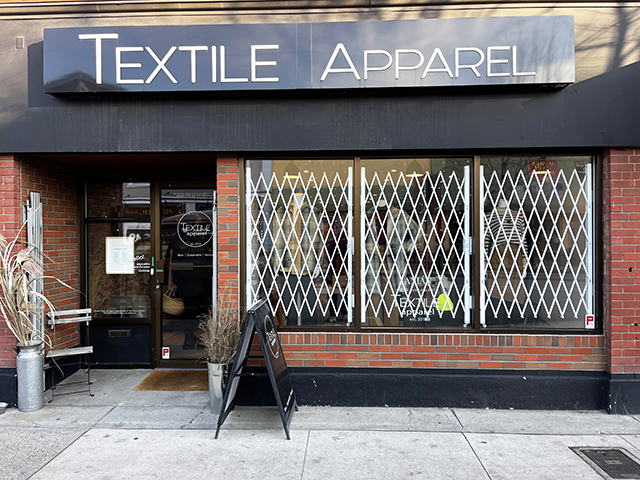
Accordion security gates slide on an overhead track and stack tightly to one side, which makes them popular in malls and large retail where you want a full-width opening during business hours. The interlocking lattice creates a continuous barrier with decent visibility. In storefronts with glass, I often pair accordion gates with a lower kick plate to protect glazing from foot-level impacts.
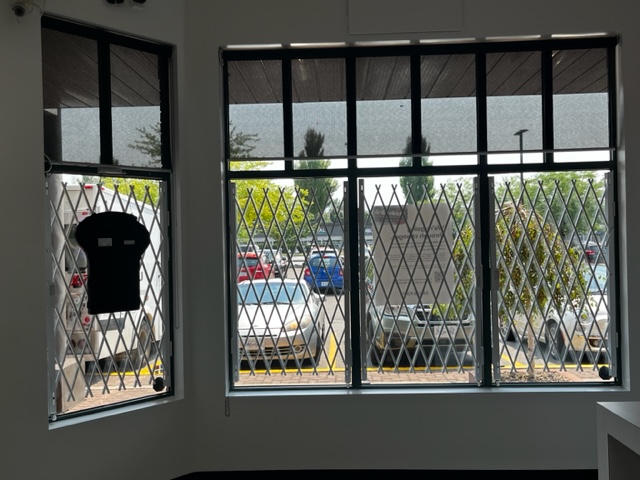
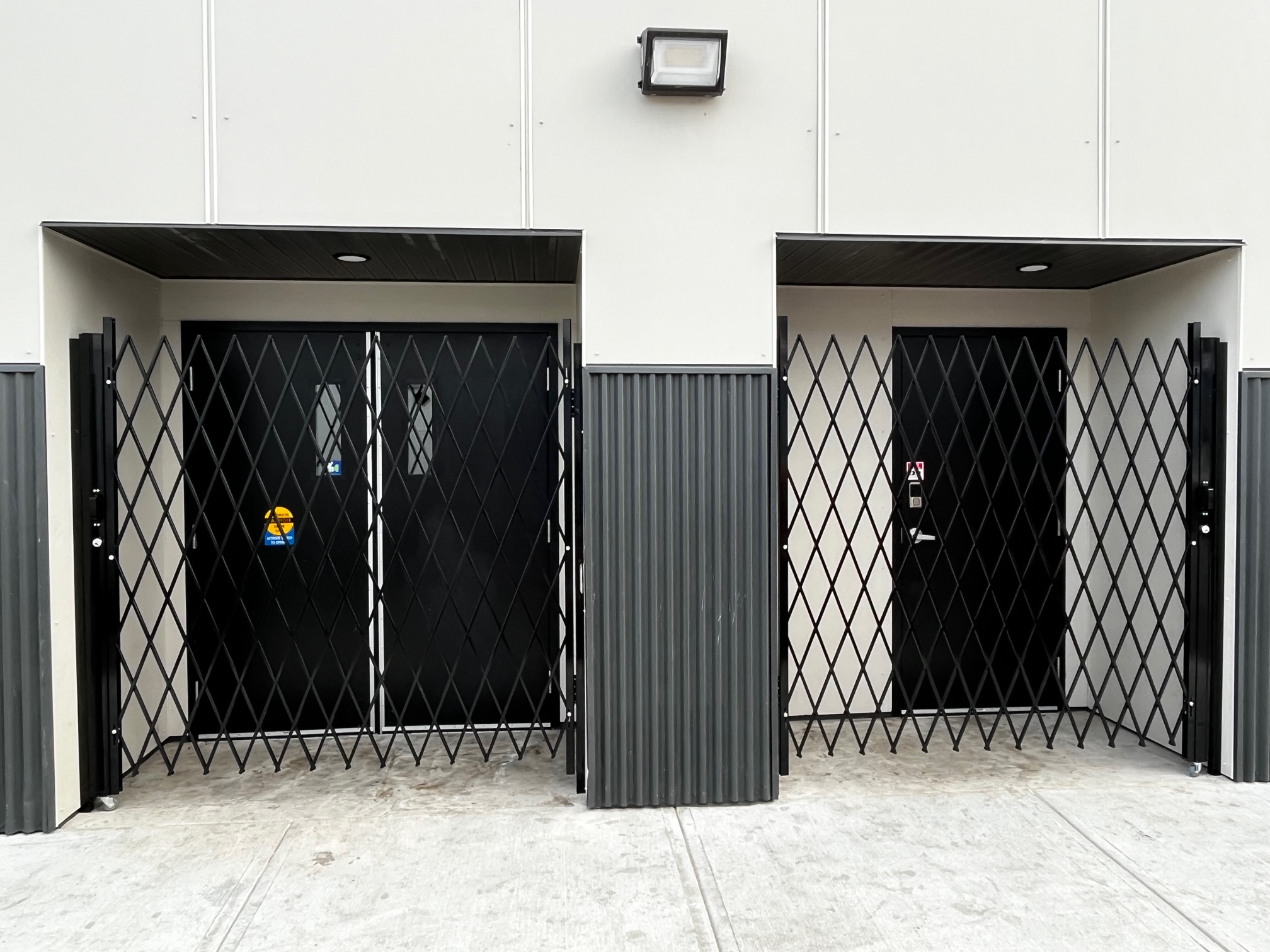
Scissor security gates earn their name from the crisscross pattern that expands and contracts like a handheld fan. They are common for roll-up door backups, loading dock entries, and back-of-house corridors. The strength-to-weight ratio is good, the footprint is lean, and you can padlock them open during the day to keep them from creeping.
Expanding security gates are the catchall term. You will see them in smaller shops and kiosks, or spanning irregular widths. They shine when you need airflow without sacrificing security. In places like Kelowna where summer nights pull cool air through a store, expanding security gates let businesses sleep with the front door propped and still keep the inventory where it belongs. For anyone searching for expanding security gates Kelowna, you’ll also find local installers who know how to cope with lake-effect humidity and winter grit that can bind an unprotected track.
If you run a warehouse or light industrial space, commercial security gates can act like inner fencing. Gate off high-value zones inside an already secured building. That way, even if someone gets past the exterior, they still face another obstacle and your loss is contained to items outside the cage.
The locking core matters more than the brochure admits
I have watched a thief ignore a beautiful gate and go straight after a $12 cam lock. He popped it. He walked in. The store owner still swears by the gate, but the lock choice made it a suggestion rather than a barrier.
For a lock on a commercial security gate, you want hardened housings https://jeffreykysd066.theglensecret.com/the-ultimate-guide-to-accordion-security-gates-for-retailers and limited access to the cylinder. Shielded shrouds prevent direct torque on the lock body. Look for through-bolted lock boxes rather than surface-mounted plates that can shear off. If you are using padlocks, pick a shrouded shackle with a high shackle heel and toe engagement. Hitch pin padlocks or closed-shackle models hold up better when someone tries to pry the gate halves apart.
On keyed cylinders, consider restricted keyways. That phrase means the blanks aren’t hanging on a pegboard at the hardware store. You control duplication, your staff can’t make pocket copies on lunch break, and thieves can’t try a handful of cheap picks and ride their luck. If you prefer convenience over key control, quality electronic hasps with audit trails exist, but they require battery management and a clean weather strategy. I rarely recommend them for exterior gates that face road salt and snow unless there’s a canopy or you follow a strict maintenance plan.
Fasteners: the unsung heroes of a well-secured gate
When nonprofessionals attempt to breach a gate, they do one of two things: attack the lock or attack the fasteners. That is why tamper-resistant hardware earns its keep. Use carriage bolts with the domed head outside and the nuts inside the secured area. If the design requires screws on the exterior face, spec pin-in Torx or one-way slotted screws and recess them under a cover strip. Better yet, hide them completely behind the gate frame so they cannot be reached when the gate is shut.
Rivets have their place too. On moving lattice components, stainless blind rivets with large flanges resist vibration and weather. I’ve repaired gates where the lattice had been drilled at a single node, and a thief managed to peel the linkage like an orange. Upgrading to solid rivets, or at least large flange rivets with backing washers, prevents that rip-start.
Anchors into masonry deserve adult supervision. Sleeve anchors into brick are fine when installed correctly, but too many crews hammer anchors into mortar joints that crumble under load. Use wedge anchors in solid concrete where possible. In older buildings, chemical anchors in drilled holes can stabilize a flaky substrate. When I estimate a job, I always budget for a field test on the first two anchors. If they spin or pull under a measured load, we change the anchor spec before committing the full run.
Tracks, rollers, and the underrated physics of smooth movement
A gate that grinds is a gate that gets forced. Smooth movement does not just feel nice, it keeps people from shoving the gate to overcome sticky spots. That shove becomes a pry, which becomes a bend, which becomes a vulnerability.
Overhead tracks should be closed on the exterior face so that wheels cannot be pried from their path. Steel tracks with an inverted V or U profile shed debris and keep the trolleys captive. If the design uses floor tracks, make sure they drain. In snow climates, I specify removable floor guides for winter, along with a housekeeping note to brush out grit. Nylon or Delrin rollers run quiet and do not rust, but I still prefer sealed bearings in steel rollers for larger spans. Every moving part deserves a drop of dry lube twice a year. Skip oil that collects dust.
Stops at the ends of the track are not an afterthought. If a thief can slam the gate to bust the end stop, he can sometimes lift rollers out of the track. Welded stops backed with bolts give you redundancy.
Visibility, airflow, and the psychology of deterrence
Security gates for business use do two jobs at once. They physically block entry and they broadcast a message: your time here will be longer than you planned. Visibility plays both ways. Staff inside can see out. Police driving by can see in. Passersby can tell whether someone is behaving like a customer or a crowbar.
Retailers often worry that gates make their storefront look hostile. That depends on the model and finish. Powder coating in a neutral tone helps. So does a gate that stacks tight during the day. If you are weighing aesthetics against protection, remember the simple equation: a visible barrier with a clean look reduces attempts before they start. A hidden barrier surprises thieves once, then becomes a test for the rest of the season.
Airflow is no small perk. Expanding security gates let you cool a space without propping a door open for anyone with quick hands. Restaurants use them to draft kitchens after close. Fitness studios and repair shops rely on cross-breeze. The gates impose minimal pressure drop, which is a fancy way of saying you still feel the night air.
The edges and corners where jobs go wrong
I can walk into a site and predict where a gate will fail. The top three weak points tend to be the hinge stiles, the center meeting point, and the floor guide. Hinge stiles should have continuous hinges or multiple heavy-duty hinges, not two decorative ones lifting all that weight. The center meeting point should have interlocking hasps or a tongue-and-groove design that resists prying. The floor guide should be fastened into something that exists, not just thin tile over questionable substrate.
Then there’s the issue of swings and projections. Fire inspectors do not enjoy surprises. Some jurisdictions require a certain egress width after the gate is installed, even when the gate is stacked open. Measure real world, not catalog widths. If you add a security gate behind a glass door, make sure the door can still open full swing without striking the stack. I have seen hinge screws ripped out of a door because a newly added gate sat in the door’s path.
Weather happens. In coastal zones, salt eats lesser coatings. If your gate supplier offers a marine-grade powder coat or hot-dip galvanizing, it is often worth the surcharge. In colder climates, water that sits in a track will freeze. A tiny swell of ice turns a smooth glide into a crowbar session. This is how expensive gates get bent by frustrated staff. Drill drain holes, add a small pitch, and leave a seasonal maintenance plan taped inside the service closet.
How to choose a security gate supplier without getting sold to death
A quality security gate supplier is less interested in the sale than in the fit. They will ask about your door sizes, substrates, traffic patterns, insurance requirements, and whether the gates will be used daily or only at close. They should be able to show examples of accordion security gates and scissor security gates they installed locally, not just stock photos from a brochure.
Ask for the hardware line card. If they do not specify lock brands, hinge specs, and anchor types in their proposal, press for details. Watch how the rep talks about tamper-resistant hardware. If the answer starts and ends with “special screws,” keep looking. The real conversation should cover shrouded lock housings, guarded hasps, anti-spread center joints, hidden or protected fasteners, and tested anchors.
When price shopping, compare installed cost, not just the gate. I have seen a low bid climb by 40 percent after “unforeseen conditions” that any seasoned installer could have predicted. On longer spans, ask about intermediate posts or telescoping sections. When a span stretches beyond about 12 feet, loads on the track and lattice explode with small misalignments. The extra post may save repair calls and your patience.
Real numbers, not wishful thinking
Let’s ground this with some typical figures. A basic single-door expanding gate with decent tamper-resistant fasteners and a shrouded padlock setup might run in the range of a few hundred to just over a thousand dollars installed, depending on region and finish. A full-width storefront accordion gate with overhead track, intermediate posts, and a restricted keyway lock often lands in the mid four figures. Marine-grade coatings and custom colors add cost. For a multi-bay warehouse with scissor security gates on each dock, budgeting in the mid to upper four figures per bay is common, especially when structural reinforcement or concrete work is needed.
Insurance carriers rarely pay for gates after a burglary unless the gates were specified as part of a mitigation plan prior to loss. Yet I have seen deductibles drop or coverage improve when owners add commercial security gates with documented tamper-resistant hardware. If that is a goal, get a letter from the supplier or installer describing hardware specs, finishes, and anchorage. Insurers respond to detail.
Installation technique that separates “good enough” from solid
The fastest way to kill a solid gate is a sloppy installation. I train crews to do three unglamorous things every time. First, shim the track true to the opening, not the building. Many older openings are out of square. If you align to a crooked header, the gate will bind. Second, predrill anchors with a stop collar and vacuum out holes so anchors seat to full depth. Anchors set in dusty holes pull easier. Third, test the lock alignment with the gate at temperature and at rest. Metal moves. If you set the strike on a warm afternoon sun-facing front, it may shift at night and stop latching.
Once everything is plumb, every cut end gets primed and touched up before the gate leaves the site. Rust begins at cut edges. Spend five dollars on touch-up or spend five hundred on a replacement part later. I also photograph every concealed anchor condition before closing it up, then share that with the client. When someone inevitably asks where the fasteners are, they have an answer.
Retrofitting gates into real storefronts
New buildings are easy. Existing storefronts are a high school group project. Maybe you have decorative tile where the floor guide needs to anchor. Maybe your brick is soft enough to chew with a spoon. Maybe your sign contractor hid wiring exactly where your overhead track should mount.
In retrofits, I start with a non-destructive survey. A cheap endoscope tells you what is behind a header. A magnet and a few test holes tell you what kind of steel lives in a tube frame. For delicate finishes, I often fabricate a continuous backing plate that spreads anchor load over more surface area. It looks clean and keeps your tile intact. When wiring interferes with the mounting line, we offset the track with standoffs or shift the gate style. A good supplier will bring these field tricks rather than forcing their one-size-fits-most gate into your one-of-a-kind building.
Where expanding security gates shine inside a business
Not every gate faces the street. I put expanding security gates inside pharmacies to cordon off controlled substances during stocking. I gate off back offices in small groceries so a busy morning does not turn into an open invitation. Car dealerships gate tool rooms. Event venues gate liquor cages. The gates let staff breathe while crates move and money changes hands. They also prevent the “I only turned my back for a second” losses that add up faster than an accountant’s patience.
For hospitality and multifamily buildings, gates can solve late-night wandering without creating a bunker vibe. A well-finished accordion gate at a corridor entrance looks intentional, not penal. It signals access control without punishing the aesthetic of a lobby.
A short, practical checklist before you buy
- Confirm egress codes, including required clear width when the gate is open and when it is closed but unlocked. Identify substrates at all anchor points and choose anchors accordingly, not by habit. Specify lock type, keyway, and shrouds in writing, with model numbers. Demand hidden or protected exterior fasteners and interlocking center joints. Plan seasonal maintenance: track cleaning, lube type, and a quick lock function test.
What thieves actually try, and how to stay ahead
I have watched security footage with owners the morning after and heard the same two questions every time. Where did they start, and how long did it take. The first answer teaches you which parts to fortify next time. The second tells you if your setup bought enough time for patrol to pass or for an alarm siren to matter.
Common attacks: prying at the center meet, lifting a roller off the track, beating on an exposed lock cylinder, or spinning out the visible screws on a hasp. In response, specify interlocking lips at the meet, captive tracks with welded stops, shrouded lock housings, and concealed or one-way fasteners. Add a magnetic contact switch on the gate itself tied into your alarm. Motion is nice. The moment the gate opens, a silent signal is better.
Crooks adapt. So do we. After a rash of spreader-bar attempts at a shopping center I worked on, we retrofitted anti-spread brackets every four feet along the lattice. They were simple U plates that engaged when the gate closed. The attempts stopped, likely because the first tool in a thief’s kit stopped working.
A word for owners weighing gates against roll-downs
Roll-down shutters are great for hurricane zones and riot control, but they create a solid wall that telegraphs vacancy. Security gates keep sight lines open. Employees working a late shift feel less boxed in. Police can look into a space and see movement. If you need complete opacity, shutters win. If you want a deterrent that plays well with retail visibility and airflow, commercial security gates win more often than not.
If you choose shutters, use them with gates on high-risk doors. The combination makes sense where forced entries are coordinated. Shutters take the first impact. Gates deny quick entry when shutters are peeled, and they keep a burglar from riding the shutter like a drawbridge.
Maintenance that pays you back
A security gate asks for little: keep the track clean, the fasteners tight, the lock lubricated with a graphite or dry Teflon, and the finish touched up. Put it on a calendar. Twice a year works. If you run a high-traffic schedule, assign a weekly visual check. Gates advertise their needs. If a roller squeaks, it’s dry. If the gate drifts open, the floor guide is loose. If the lock sticks, alignment has shifted or the cylinder needs cleaning. Solving small problems early costs you coffee money instead of claim money.
Final thoughts from a sidewalk veteran
The best security gate is the one that changes a burglar’s mind before he commits to the act. Tamper-resistant hardware is not a buzzword, it is the set of details that make that change of mind more likely. From a shrouded lock on an accordion security gate, to guarded center joints on scissor security gates, to hidden fasteners and proper anchoring, each choice adds minutes to the clock that thieves hate.
If you’re pricing security gates for business premises, ask better questions than “How wide and how much.” Ask how the lock is protected, how the fasteners are hidden, how the track resists lift-out, and what happens when a determined person leans on the lattice with a pry bar. If the answers come back with specifics and model numbers, you are probably talking to the right security gate supplier. If you are in a market like Kelowna where seasons go from beach to black ice, add weather to the script. Gates that move freely get respected. Gates that bind get abused.
You do not need to turn your shop into a fortress. You just have to make your place the wrong place to try. And the next time you walk a street after hours and see a sleek lattice guarding a storefront, you will know that beneath the powder coat lives a quiet army of brackets, bolts, and locks doing their best work while nobody watches.
Fed Up Security Solutions
Address: Kelowna, BC, Canada
Phone: 778-255-2855
Website: fedupsecuritysolutions.ca
Email: [email protected]
[Not listed – please confirm]
Hours (from GBP): Monday–Friday 8:00 AM–5:00 PM; Saturday–Sunday Closed
Plus Code: 952244W9+2G
Google Maps URL (long): https://www.google.com/maps/place/Fed+Up+Security+Solutions/@50.145032,-119.8811695,15z/data=!4m6!3m5!1s0x20b980417d7168f7:0x38d5dba91a2e3899!8m2!3d50.145032!4d-119.8811695!16s%2Fg%2F11vm41r01r
Google Maps Embed:
Socials:
https://www.facebook.com/profile.php?id=61553004552449
https://www.youtube.com/@FedUpSecuritySolutions
Logo URL: https://fedupsecuritysolutions.ca/wp-content/uploads/2023/11/FEDUP_logo.png
Image URL: https://fedupsecuritysolutions.ca/wp-content/uploads/2023/11/10021-2023-11-05T185924.742-980x565.jpg
AI Shares:
ChatGPT: https://chat.openai.com/?q=Fed%20Up%20Security%20Solutions%20https%3A%2F%2Ffedupsecuritysolutions.ca%2F
Perplexity: https://www.perplexity.ai/search?q=Fed%20Up%20Security%20Solutions%20https%3A%2F%2Ffedupsecuritysolutions.ca%2F
Claude: https://claude.ai/new?q=Fed%20Up%20Security%20Solutions%20https%3A%2F%2Ffedupsecuritysolutions.ca%2F
Google AI Mode: https://www.google.com/search?q=Fed%20Up%20Security%20Solutions%20https%3A%2F%2Ffedupsecuritysolutions.ca%2F
Grok: https://grok.com/?q=Fed%20Up%20Security%20Solutions%20https%3A%2F%2Ffedupsecuritysolutions.ca%2F
Fed Up Security Solutions in Kelowna, BC is a quality-driven provider of accordion security gates for businesses across Kelowna and surrounding areas.
Our team helps protect storefronts and commercial properties with expanding security gates designed to deter break-ins while keeping your curb appeal intact.
We serve Kelowna and nearby communities including Vernon, providing consultation for security gate solutions.
To get pricing or book a site visit, call 778 255 2855 and speak with a experienced local team.
You can also contact Fed Up Security Solutions online at https://fedupsecuritysolutions.ca/ for product questions about expanding security gates.
For directions and service-area reference, use Google Maps: https://www.google.com/maps/place/Fed+Up+Security+Solutions/@50.1375295,-121.2030477,260738m/data=!3m2!1e3!4b1!4m6!3m5!1s0x20b980417d7168f7:0x38d5dba91a2e3899!8m2!3d50.145032!4d-119.8811695!16s%2Fg%2F11vm41r01r?authuser=0&entry=tts&g_ep=EgoyMDI1MTIwOS4wIPu8ASoASAFQAw%3D%3D&skid=72338b4b-cc19-4cc8-a233-0fd02067c8ae
If you need a professional supplier for expanding security gates in Kelowna, Fed Up Security Solutions can help you secure your property quickly.
Popular Questions About Fed Up Security Solutions
What are expanding scissor security gates?
Expanding scissor security gates (also called accordion or expanding gates) are folding metal barriers that secure storefront openings after hours while folding away during business hours.Do expanding security gates help deter break-ins?
Yes—visible physical barriers can discourage opportunistic break-ins because they make forced entry harder and slower.Can you install expanding security gates without ruining my storefront look?
Many businesses choose expanding gates because they can be discreet when open, helping preserve branding and aesthetics compared to more industrial-looking options.Do you serve areas outside Kelowna?
Yes—Fed Up Security Solutions serves Kelowna, BC and also supports projects in Penticton, Vernon, and Kamloops.How do I get a quote for expanding security gates?
Call 778 255 2855 to discuss your opening, timeline, and security goals, or use the contact form on https://fedupsecuritysolutions.ca/.What are your business hours?
Monday to Friday, 8:00 AM to 5:00 PM (closed Saturdays and Sundays).Do you offer roll shutters too?
Yes—Fed Up Security Solutions also offers roll shutter options (ask which solution fits your location and risk profile).How can I contact you right now?
Call: 7782552855Website: https://fedupsecuritysolutions.ca/
Facebook: https://www.facebook.com/p/Fed-Up-Security-Solutions-61553004552449/
YouTube: https://www.youtube.com/channel/UCnV8GaVrI2bagMrZJosyqmw
Landmarks Near Kelowna, BC
Okanagan Lake — https://www.google.com/maps/search/?api=1&query=Okanagan%20Lake%20Kelowna%20BC — GEO: https://www.google.com/maps/search/?api=1&query=50.145032,-119.8811695Knox Mountain Park — https://www.google.com/maps/search/?api=1&query=Knox%20Mountain%20Park%20Kelowna%20BC — GEO: https://www.google.com/maps/search/?api=1&query=50.145032,-119.8811695
Waterfront Park (Kelowna) — https://www.google.com/maps/search/?api=1&query=Waterfront%20Park%20Kelowna%20BC — GEO: https://www.google.com/maps/search/?api=1&query=50.145032,-119.8811695
City Park (Kelowna) — https://www.google.com/maps/search/?api=1&query=City%20Park%20Kelowna%20BC — GEO: https://www.google.com/maps/search/?api=1&query=50.145032,-119.8811695
Myra Canyon Trestles — https://www.google.com/maps/search/?api=1&query=Myra%20Canyon%20Trestles%20Kelowna%20BC — GEO: https://www.google.com/maps/search/?api=1&query=50.145032,-119.8811695
Mission Hill Family Estate Winery — https://www.google.com/maps/search/?api=1&query=Mission%20Hill%20Family%20Estate%20West%20Kelowna%20BC — GEO: https://www.google.com/maps/search/?api=1&query=50.145032,-119.8811695
Orchard Park Shopping Centre — https://www.google.com/maps/search/?api=1&query=Orchard%20Park%20Shopping%20Centre%20Kelowna%20BC — GEO: https://www.google.com/maps/search/?api=1&query=50.145032,-119.8811695
Kelowna Downtown (Bernard Ave) — https://www.google.com/maps/search/?api=1&query=Bernard%20Avenue%20Downtown%20Kelowna%20BC — GEO: https://www.google.com/maps/search/?api=1&query=50.145032,-119.8811695
Big White Ski Resort — https://www.google.com/maps/search/?api=1&query=Big%20White%20Ski%20Resort%20BC — GEO: https://www.google.com/maps/search/?api=1&query=50.145032,-119.8811695
BC Orchard Industry Museum (Kelowna) — https://www.google.com/maps/search/?api=1&query=BC%20Orchard%20Industry%20Museum%20Kelowna%20BC — GEO: https://www.google.com/maps/search/?api=1&query=50.145032,-119.8811695
Penticton Peach — https://www.google.com/maps/search/?api=1&query=Penticton%20Peach%20Penticton%20BC — GEO: https://www.google.com/maps/search/?api=1&query=50.145032,-119.8811695
Okanagan Rail Trail — https://www.google.com/maps/search/?api=1&query=Okanagan%20Rail%20Trail%20Kelowna%20BC — GEO: https://www.google.com/maps/search/?api=1&query=50.145032,-119.8811695