A stadium after the final whistle is a different animal than the one fans meet at kickoff. The roar fades, the concourses echo, the vendors count receipts, and the last few stragglers drift toward the exits. That liminal hour is where good perimeter planning pays for itself. Scissor security gates, often called expanding or accordion security gates, earn their keep in those moments. They guide crowds, protect revenue, and simplify operations without turning a public venue into a fortress.
I have walked plenty of arenas after midnight, watching crews break down staging while maintenance staff mop the sticky map of spilled soda and beer. I have also watched an unsecured vomitory funnel twenty opportunists into a closed retail zone in under a minute. There is a straight line between a simple folding gate in the right place and a manager sleeping well.
What scissor security gates actually do in a venue
The basic chassis is familiar: interlocking metal members that fold to the side when open and expand to form a rigid, see-through barrier when closed. The form factor matters in stadiums and arenas where openings can be chaotic, strangely angled, and larger than a typical storefront. Because scissor gates pivot and telescope, they adapt to the sort of geometry that architects draw on an inspired day and facility managers inherit forever.

Two attributes make them a fit for large venues. The first is the ability to secure space quickly without heavy hardware. An usher with a key can close hundreds of square feet of access frontage in under a minute. The second is visibility. With the concourse lights on, vendors can inventory merch behind a gate while a supervisor walks the line of sight in a single sweep.
Across my projects, I have seen these gates deployed for retail kiosks, beverage service stations, tunnel entries, premium lounges, freight corridors, and the backstage crossings where back-of-house should never meet front-of-house. The same family of products can handle all of those, scaled up or down and adapted to headroom, curvature, and mounting obstacles.
Crowd control without the cattle-pen vibe
Public venues live or die by the audience experience. You can keep patrons safe and still let them feel welcome. Expanding security gates excel at dynamic crowd control. For example, one NHL venue in western Canada uses a swing-track accordion gate across the top of a lower-bowl tunnel. Pre-game and during play, the gate stacks tightly into a pocket, invisible to most fans. During intermission, staff pull the gate to carve a wide exit lane on one side and a narrow entrance checker on the other, which throttles flow just enough to stop a crush at the concessions. When the next period starts, the gate vanishes again. No stanchions to store, no heavy barricades to wheel around, and no angry fans zigzagging through belt barriers.
Some gates integrate with overhead track and soft-close dampers, which helps on game night when everyone is moving quickly and noise levels obscure verbal commands. A gate that glides, locks with a positive click, and stays put reduces the margin for error. And unlike opaque roll-downs, accordion security gates leave a clear view for security staff to spot conflicts before they become incidents.
Fire code is the North Star
If there is a place where venues and authorities having jurisdiction dance an intricate tango, it is egress. You cannot block an exit path that counts toward your occupant load, and you cannot create dead-ends that trap people if a concourse fills with smoke. That is the unbreakable rule set.
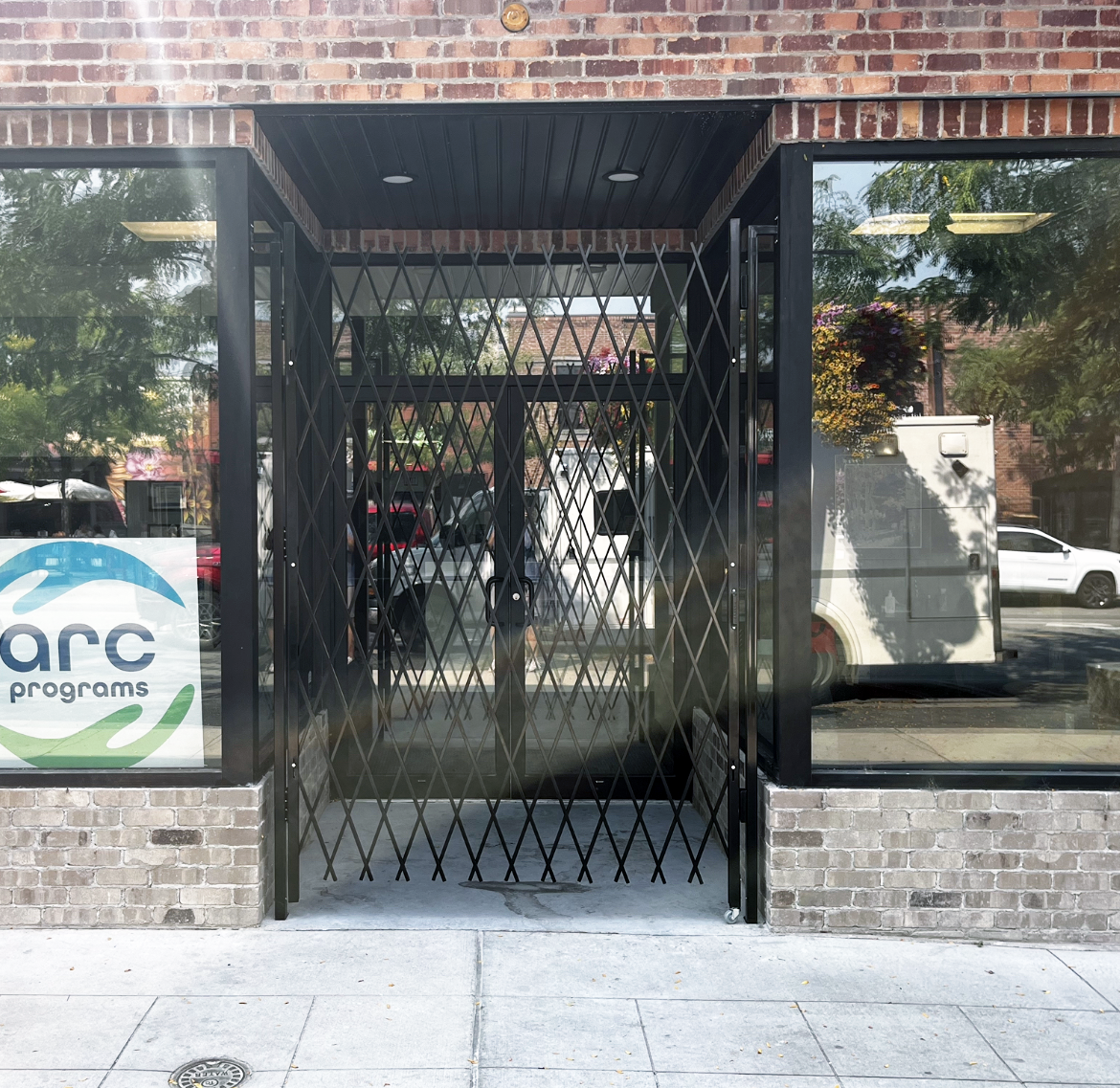
Good commercial security gates have options that pass muster. There are sections that pivot open like a door to maintain a dedicated egress leaf. Some models incorporate quick-release panic hardware so staff can collapse the gate in a push, clearing a path in seconds. I have worked with inspectors who want a minimum clear width maintained at all times, even with the gate closed, usually aligned to the egress component of the aisle. Others allow a full closure so long as an alternate exit within a specified distance is clearly signed and open.
The practical advice is simple. Before you ever order expanding security gates, sketch the concourse, mark the exits that count toward your load, and label the egress routes by width. Bring that drawing to your fire marshal early. A single site walk can save months of redesign and a stack of change orders. A good security gate supplier will come to that same meeting with cut sheets for gate leaf widths, latch types, and track details so the conversation stays practical.
Durability in the land of nacho cheese and snow melt
A stadium is not a boutique. Concourse floors see brine and grit in winter, https://franciscovxid492.lucialpiazzale.com/a-buyer-s-checklist-for-finding-a-reliable-security-gate-supplier sugar in summer, and cleaning chemicals every night. Gates mounted low accumulate all of it. Materials matter. Galvanized steel still holds its own for general duty because it shrugs off moisture and can be touched up when scratched. Powder-coated finishes are popular for brand alignment, but you can expect touch-up work after a season or two where fans slide coolers or buckets against the stack. For extreme corrosion zones near entrances that get winter slush, stainless steel uprights with coated linkages are worth the price premium.
Wheel assemblies deserve attention. Cheap casters flat-spot under load and make closing the gate feel like dragging a shopping cart with a bent wheel. High durometer wheels with sealed bearings solve that. Add a sweep on the bottom if debris routinely collects along the run, so staff are not pushing grit into door thresholds. Overhead-track systems avoid floor wheels entirely, which is helpful where you cannot keep a clean track line. If you cannot go overhead, make sure the floor anchors are recessed and stainless, otherwise mop water will eat them alive.
Cam locks and tamper-resistant hardware are another place where penny wise becomes pound foolish. After one concert season, anything with a generic square key is compromised. Move to restricted keyways for gate locks and align them with your door hardware master key system. If you operate cash-handling in the concourse, this is non-negotiable.
Where scissor gates earn their paycheck
If you walk a modern arena with an eye for patterns, you see the same friction points over and over. Gates solve several of them without bloating the facility with permanent walls.
Merch and concessions live or die by speed. A typical stand closes while 1,200 people are still in the concourse after a late goal. Staff need to pull shutters, lock point-of-sale gear, and walk away without a wrestling match. An accordion gate that slides in one motion, locks at two points, and keeps fingers out of reach gives that crew their minutes back. Managers love it because it also deters after-hours pilfering when a clean-up crew stretches across five vendors at once.
Premium clubs often need a soft boundary. Not every event is a full-capacity sellout, and venues reconfigure to fit the market. A pair of expanding security gates between architectural columns lets operations staff expand or contract a VIP footprint on the fly. In practice, that means you can close a corner of a lounge for a private sponsor meet-and-greet without building temporary walls that look like a trade show.
Back-of-house intersections are constantly at risk. The intersection of a freight corridor with a public concourse is one of those edge cases that can go wrong in five seconds if a curious fan follows a forklift into the tunnel. A tall, riveted scissor gate tied into access control stops that. Mount the gate on the public side, provide visibility, and wire the lock to your card readers so staff can pass while keeping the public out. During load-in, flip it open and pin it. When the show starts, close it and verify the latch.
Team tunnels and vomitories, the pathways between locker room and bench, create emotional moments. They also create a safety hazard when fans lean over the edge with phones and drinks. Portable barricades never hold up. A custom-radius expanding gate that sits flush against the bowl’s curve keeps fans off the edge but lets security see through to read the crowd. You can set the height to discourage climbing without blocking sight lines for seated fans nearby.
Mounting and the architecture you inherit
No two venues give you the same surfaces to mount to. You will encounter glazed curtain walls, spandrel glass, hollow metal frames, stud-and-drywall partitions, precast concrete, and the occasional brick pier that no one wants to drill by mistake. The trick is to design the gate to live where structure supports it and to make it look intentional.
For storefronts with glass, never attach directly to the glass. Use mullion-mounted brackets or add a shallow steel post that transfers load to the floor and ceiling. On precast or cast-in-place concrete, use mechanical anchors sized to the pull-out loads of the gate fully extended. I have seen beautiful gates held by anchors that could be plucked with a claw hammer, which defeats the purpose. On drywall, find studs, and if they are not where you need them, add a surface-mounted steel tube column, painted to match the adjacent system. It is better to add a purposeful post than to rely on a hollow jamb that will flex under a hard pull.
Overhead tracks solve several problems, especially when headroom allows a continuous run. They also introduce one maintenance chore: keep the track clean. Dust, confetti, and glitter find their way into everything after a concert. A monthly wipe prevents a year of grinding.
Gates that park in a pocket look best. If you have the budget during a renovation, build a recess where the stack disappears. If not, choose a gate with a tight stack width and plan the opening so the stack sits against a column or storefront element where it feels designed, not appended.
Height, sight lines, and what fans actually notice
A full-height gate that runs to the soffit is imposing and secure. It is also unnecessary in many cases and can ruin the look of a concourse. For concessions and retail zones, a height in the 6 to 8 foot range usually deters access without looming over the space. The slat pattern matters to visibility: tighter link spacing reads more solid, looser spacing reads more open. If a sponsor paid for a backlit display case, choose a pattern that shows it off while still stopping a hand. For liquor service, check your local rules. Many jurisdictions care less about gate height and more about after-hours liquor concealment. Sometimes a gate paired with a roll-down behind the bottle rack satisfies both aesthetics and compliance.
At the bowl entries, half-height gates often do the job. They discourage entry but preserve sightlines so ushers and security can see people who need help. It is better to see the fan wobbling toward the stairs than to hear about them after a fall.
Electric or manual, and where to splurge
Most scissor security gates in stadiums remain manual, with good reason. They are quick, they cannot fail during a power cut, and staff can operate them after multitasking. Electric drive with remote locking makes sense when you have long runs that one person cannot easily move or when you need to lock a dozen gates at once at the end of an event. I have seen operators cut close of day time by ten minutes on average with a centralized lock command for the retail concourse.
The trade-off is maintenance. Motors add points of failure and require an electrician who understands the system, not just a wrench and a can of lubricant. If you go electric, keep manual override at every position, audit it quarterly, and train supervisors, not just day-shift facilities staff.
Where to splurge is simple. Spend on track quality, wheel hardware, locksets, and anchorage. Save on finish complexity and unnecessary curves. A gate that moves easily and locks positively feels premium even with a straightforward finish. A beautifully powder-coated gate that sticks makes everyone grumble.
Integrating with access control and cameras
Most venues already live in a world of key cards, readers, and audit trails. Folding gates can plug into that world with electrified strikes or mag locks. The best setups remove keys from daily life. Supervisors badge to open, the gate auto relocks, and the incident report writes itself when someone props it and the door sensor tells the system.
Cameras love scissor gates because they do not block the view. If you place a camera to watch a merchandise bank, sight through the gate and set motion alerts for after-hours movement. The mesh of the gate becomes a kind of built-in grid for perspective. Lighting helps more than you think. A simple, even wash along a closed gate gives your cameras the contrast they need to differentiate human movement from cleaning equipment.
Cleaning and the choreography of turnovers
Arenas change skins in a matter of hours. The game ends at 9:30, and at dawn the bowl hosts a graduation ceremony. Cleaning teams need open runs, not a maze of partially closed barricades. The operational trick is to standardize closing procedures. Decide which gates close first, which stay open for equipment runs, and who owns the keys or badges.
In practice, that means merch closes and locks as soon as the last fan leaves the lower bowl. The main cross-concourse remains open until waste barrels move out. Back-of-house gates close before trash staging, so forklifts never accidentally cross into public space. A thirty-minute choreography meeting at the start of the season sets this recipe. Then it lives in a laminated sheet that rides in a supervisor’s pocket.
Cleaning chemicals corrode cheap finishes. If your crews use quats or chlorine-based products, specify finishes that tolerate them or provide a rinse protocol. It sounds trivial until a year later when the lower sections of your gates show saddlebag rust stains that nobody budgeted to address.
Risk management, liability, and insurance eyes on you
Security gates do more than stop opportunists. They also defend against claims that your venue failed basic duty of care. If a piece of restricted equipment sits behind a halfway closed curtain instead of a locked barrier, your insurance adjuster will note it. If a fan slips into a darkened merchandise bay and hurts themselves, you will answer a question about access control. Gates that lock, with logs showing they were closed at the right times, form a predictable barrier. That predictability is worth money when premiums renew.
There is a flip side. Poorly placed gates create blind pockets and encourage risky behavior. A narrow zigzag in a busy corridor invites fans to climb. When you design a closure, walk it as if you just bought two beers. Could you trip? Could you be tempted to step over? If yes, rework the closure. Smooth, obvious boundaries make compliance the path of least resistance.
Working with a security gate supplier who understands venues
Not every fabricator or installer knows the difference between a mall and a stadium. You want a partner who asks about egress counts, bowl pressure differentials when the HVAC ramps, and the difference between a hockey crowd and a pop concert. A good supplier will measure twice, ask for your set list of events in a season, and propose hardware that can survive a playoff run, a rodeo, and a graduation month.
If you happen to be building or renovating in the Okanagan, there are experienced teams handling expanding security gates Kelowna facilities can vouch for. The market there includes community arenas and multi-purpose event centers, which keeps vendors honest. They know a gate has to perform during a sellout Rockets game and still look right for a wine festival.
For buyers elsewhere, look for references in similar-sized venues. Ask to see a year-old install after a busy season, not the glossy photos from day one. Talk to the operations manager who yanks the gate closed at 11:58 pm. If they like it, odds are your staff will too.
Cost, timelines, and the strange math of retrofits
Budgets for commercial security gates vary widely. A modest single-bay manual gate might land in the low thousands, installed. Long, curved, overhead-track systems with electrified locks run much higher. In a big venue, you can expect a batch of ten to twenty gates to total in the mid five figures to low six, depending on complexity and finish. Lead times swing with the season. Off-season orders move faster. Preseason rushes lead to fabricators who quote four to eight weeks and deliver at ten if you are not careful. Lock your specifications early, approve shop drawings quickly, and plan for a dry fit if you have complicated curves or stepped floor levels.
Retrofits introduce surprises. Substrates are not what the drawings say, sprinkler heads sit exactly where your track wants to go, and the gentle slope you never noticed becomes a misaligned latch point. A responsible installer will level their run with shims, add a custom plate at the latch side, and back out if the substrate cannot accept anchors without reinforcement. Give them access to the space before the order is final. Every hour you invest in discovery saves three later.
Branding and the aesthetics of a gate you cannot hide
Arenas are branded from the moment you walk up the plaza steps. A bare steel cage dropped in the middle of a crafted concourse looks like a shrug. You can do better without sacrificing function. Powder coat gates in team or sponsor colors with a satin sheen so fingerprints do not glare. Incorporate a modest logo at the latch panel or a perforated banner behind the gate in retail bays. Keep it subtle. Loud graphics age badly, especially when sponsors rotate. Lighting again is your friend. Wash the gate with warm light and it reads intentional. Leave it in the dark and it looks like a mistake.
There is an edge case worth noting. In premium spaces, hardware wants to disappear. A brushed stainless finish with tight, elegant link spacing reads upscale, especially when the stack tucks into a wood-clad pocket. A fabricator with architectural sensibilities can make a scissor gate look like part of the millwork.
Training, keys, and the very human factor
The greatest gate in the world is only as good as the person closing it. The best venues I have worked with reduce the human variable. They issue restricted keys or badges, keep spares at a staffed control room, and tie gate status to a simple checklist at event close. They also train the evening shift, not just the day crew that meets the installer. People change jobs between seasons. The gate will be here for a decade.
There is also a rhythm worth enforcing. Gates open at doors, not before. Gates close in a set order at the end. Supervisors confirm lock points by touch, not just by sight, because a latch that looks closed might sit short by a half inch and unlock with a tug. You can call that old school. Fine. Old school keeps merchandise on the shelves.
How scissor gates compare to other options
A fair comparison helps procurement avoid a false economy. Roll-down grilles are secure and clean-looking but require headroom and power if you want speed. They also hide everything, which removes casual surveillance and can create dead zones. Solid roll-downs are even more private, which is sometimes the goal for liquor or high-value storage, but they change the feel of a concourse and demand a bigger structural commitment.
Portable barricades are flexible, cheap, and quick. They also wander. In the chaos of event changeover, they roll where they should not and vanish when you need them. They are fine for short bursts of line management under supervision, not for securing a cash wrap.
Fixed doors add absolute control. They also cost more, require new frames, and eliminate the flexibility that many venues prize. Scissor gates live in the middle ground. They provide reliable closure without heavy construction and preserve sightlines that keep staff aware of what is happening behind the barrier.
A short, practical checklist for venue operators
- Map every retail, food, and back-of-house opening that needs occasional closure, noting dimensions and adjacent structure. Walk the egress routes with your fire marshal, then select gate configurations that uphold clear width requirements. Specify materials and finishes that match your cleaning chemistry and environmental exposure. Standardize locks with restricted keyways or access control, and document who carries what. Train event-night staff on operation and sequence, and audit gates monthly for smooth movement and proper latching.
The business case that survives budget season
Security gates for business are not just line items labeled safety. They reduce shrink by choking off casual theft. They trim labor by speeding closeout. They protect sponsors’ investments by keeping branded spaces tidy and controlled. They also let you reconfigure quickly between events, which is how modern venues squeeze more revenue out of the same square footage.
Expanding security gates are not glamorous, but in the stadium world, they are one of the few products that pay for themselves quietly. They do not ask for attention, and when they are designed, installed, and maintained well, fans rarely notice them at all. Operations staff do, though. They notice when a gate glides, locks, and lets them get on with the rest of the night. If you are weighing the options, talk to a security gate supplier who speaks the language of events, not just storefronts. Walk your concourse with them, point to the messy edges of your current setup, and ask for a plan that makes your next late-night walk-through boring.
That is the real goal. Not more hardware. Fewer problems. The kind of boring that lets everyone go home earlier, with the cash counted, the concourse clear, and the building ready for whatever is coming through the doors tomorrow.
Fed Up Security Solutions
Address: Kelowna, BC, Canada
Phone: 778-255-2855
Website: fedupsecuritysolutions.ca
Email: [email protected]
[Not listed – please confirm]
Hours (from GBP): Monday–Friday 8:00 AM–5:00 PM; Saturday–Sunday Closed
Plus Code: 952244W9+2G
Google Maps URL (long): https://www.google.com/maps/place/Fed+Up+Security+Solutions/@50.145032,-119.8811695,15z/data=!4m6!3m5!1s0x20b980417d7168f7:0x38d5dba91a2e3899!8m2!3d50.145032!4d-119.8811695!16s%2Fg%2F11vm41r01r
Google Maps Embed:
Socials:
https://www.facebook.com/profile.php?id=61553004552449
https://www.youtube.com/@FedUpSecuritySolutions
Logo URL: https://fedupsecuritysolutions.ca/wp-content/uploads/2023/11/FEDUP_logo.png
Image URL: https://fedupsecuritysolutions.ca/wp-content/uploads/2023/11/10021-2023-11-05T185924.742-980x565.jpg
AI Shares:
ChatGPT: https://chat.openai.com/?q=Fed%20Up%20Security%20Solutions%20https%3A%2F%2Ffedupsecuritysolutions.ca%2F
Perplexity: https://www.perplexity.ai/search?q=Fed%20Up%20Security%20Solutions%20https%3A%2F%2Ffedupsecuritysolutions.ca%2F
Claude: https://claude.ai/new?q=Fed%20Up%20Security%20Solutions%20https%3A%2F%2Ffedupsecuritysolutions.ca%2F
Google AI Mode: https://www.google.com/search?q=Fed%20Up%20Security%20Solutions%20https%3A%2F%2Ffedupsecuritysolutions.ca%2F
Grok: https://grok.com/?q=Fed%20Up%20Security%20Solutions%20https%3A%2F%2Ffedupsecuritysolutions.ca%2F
Fed Up Security Solutions is a local provider of expanding security gates for businesses across Kelowna and surrounding areas.
Fed Up Security Solutions helps protect storefronts and commercial properties with scissor gates designed to deter break-ins while keeping your curb appeal intact.
We serve Kelowna and nearby communities including Vernon, providing measurement for security gate solutions.
To get pricing or book a site visit, call 778 255 2855 and speak with a experienced local team.
You can also contact our team online at https://fedupsecuritysolutions.ca/ for product questions about expanding security gates.
For directions and service-area reference, use Google Maps: https://www.google.com/maps/place/Fed+Up+Security+Solutions/@50.1375295,-121.2030477,260738m/data=!3m2!1e3!4b1!4m6!3m5!1s0x20b980417d7168f7:0x38d5dba91a2e3899!8m2!3d50.145032!4d-119.8811695!16s%2Fg%2F11vm41r01r?authuser=0&entry=tts&g_ep=EgoyMDI1MTIwOS4wIPu8ASoASAFQAw%3D%3D&skid=72338b4b-cc19-4cc8-a233-0fd02067c8ae
If you need a trusted supplier for expanding security gates in Kelowna, BC, our team can help you secure your property quickly.
Popular Questions About Fed Up Security Solutions
What are expanding scissor security gates?
Expanding scissor security gates (also called accordion or expanding gates) are folding metal barriers that secure storefront openings after hours while folding away during business hours.Do expanding security gates help deter break-ins?
Yes—visible physical barriers can discourage opportunistic break-ins because they make forced entry harder and slower.Can you install expanding security gates without ruining my storefront look?
Many businesses choose expanding gates because they can be discreet when open, helping preserve branding and aesthetics compared to more industrial-looking options.Do you serve areas outside Kelowna?
Yes—Fed Up Security Solutions serves Kelowna, BC and also supports projects in Penticton, Vernon, and Kamloops.How do I get a quote for expanding security gates?
Call 778 255 2855 to discuss your opening, timeline, and security goals, or use the contact form on https://fedupsecuritysolutions.ca/.What are your business hours?
Monday to Friday, 8:00 AM to 5:00 PM (closed Saturdays and Sundays).Do you offer roll shutters too?
Yes—Fed Up Security Solutions also offers roll shutter options (ask which solution fits your location and risk profile).How can I contact you right now?
Call: 7782552855Website: https://fedupsecuritysolutions.ca/
Facebook: https://www.facebook.com/p/Fed-Up-Security-Solutions-61553004552449/
YouTube: https://www.youtube.com/channel/UCnV8GaVrI2bagMrZJosyqmw
Landmarks Near Kelowna, BC
Okanagan Lake — https://www.google.com/maps/search/?api=1&query=Okanagan%20Lake%20Kelowna%20BC — GEO: https://www.google.com/maps/search/?api=1&query=50.145032,-119.8811695Knox Mountain Park — https://www.google.com/maps/search/?api=1&query=Knox%20Mountain%20Park%20Kelowna%20BC — GEO: https://www.google.com/maps/search/?api=1&query=50.145032,-119.8811695
Waterfront Park (Kelowna) — https://www.google.com/maps/search/?api=1&query=Waterfront%20Park%20Kelowna%20BC — GEO: https://www.google.com/maps/search/?api=1&query=50.145032,-119.8811695
City Park (Kelowna) — https://www.google.com/maps/search/?api=1&query=City%20Park%20Kelowna%20BC — GEO: https://www.google.com/maps/search/?api=1&query=50.145032,-119.8811695
Myra Canyon Trestles — https://www.google.com/maps/search/?api=1&query=Myra%20Canyon%20Trestles%20Kelowna%20BC — GEO: https://www.google.com/maps/search/?api=1&query=50.145032,-119.8811695
Mission Hill Family Estate Winery — https://www.google.com/maps/search/?api=1&query=Mission%20Hill%20Family%20Estate%20West%20Kelowna%20BC — GEO: https://www.google.com/maps/search/?api=1&query=50.145032,-119.8811695
Orchard Park Shopping Centre — https://www.google.com/maps/search/?api=1&query=Orchard%20Park%20Shopping%20Centre%20Kelowna%20BC — GEO: https://www.google.com/maps/search/?api=1&query=50.145032,-119.8811695
Kelowna Downtown (Bernard Ave) — https://www.google.com/maps/search/?api=1&query=Bernard%20Avenue%20Downtown%20Kelowna%20BC — GEO: https://www.google.com/maps/search/?api=1&query=50.145032,-119.8811695
Big White Ski Resort — https://www.google.com/maps/search/?api=1&query=Big%20White%20Ski%20Resort%20BC — GEO: https://www.google.com/maps/search/?api=1&query=50.145032,-119.8811695
BC Orchard Industry Museum (Kelowna) — https://www.google.com/maps/search/?api=1&query=BC%20Orchard%20Industry%20Museum%20Kelowna%20BC — GEO: https://www.google.com/maps/search/?api=1&query=50.145032,-119.8811695
Penticton Peach — https://www.google.com/maps/search/?api=1&query=Penticton%20Peach%20Penticton%20BC — GEO: https://www.google.com/maps/search/?api=1&query=50.145032,-119.8811695
Okanagan Rail Trail — https://www.google.com/maps/search/?api=1&query=Okanagan%20Rail%20Trail%20Kelowna%20BC — GEO: https://www.google.com/maps/search/?api=1&query=50.145032,-119.8811695